Crossing
Passing oncoming traffic, narrow spots and one-way streets.
1. Passing oncoming traffic2. Where you must not go3. Side distance4. Passing a tram5. Crossroads without arrows6. Crossroads with arrows7. Road narrows8. Priority with no signs9. Priority with signs10. One-way street11. Two similar signs12. Turn left13. Cyclists in the opposite direction
Passing oncoming traffic
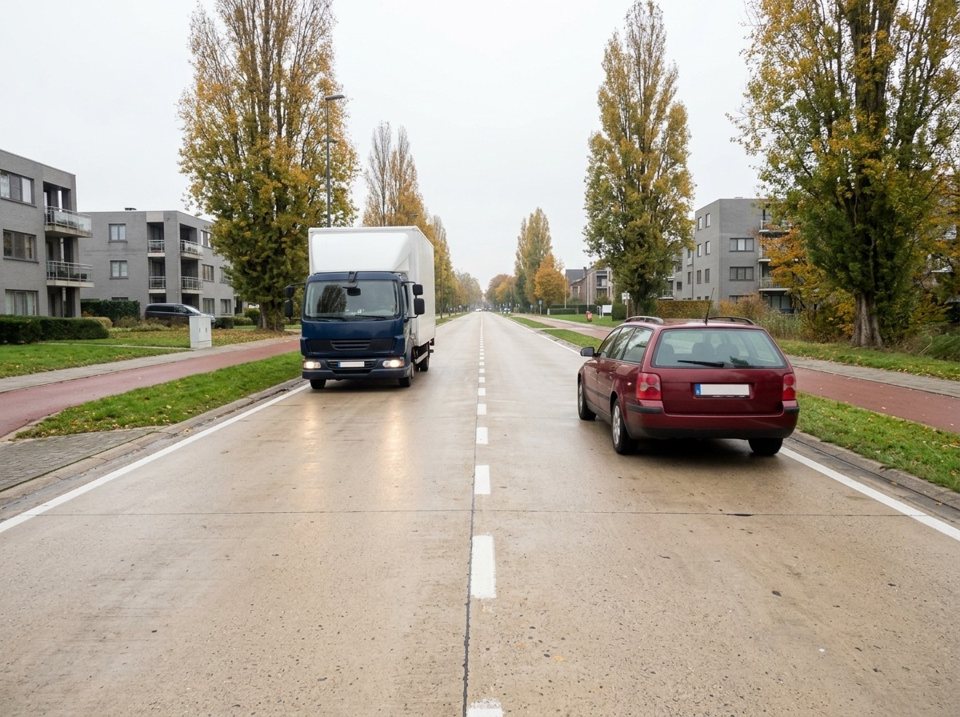
Passing oncoming traffic
1 / 2
Keep right. If the carriageway is too narrow to pass easily, you may use a levelled verge or, on a road with a central carriageway (two dashed edge lines), the side strip, as long as you do not endanger anyone there.
§Official source · art. 15.3 · last amended 2022-10-01
Wanneer het kruisen wegens de breedte van de rijbaan niet gemakkelijk kan uitgevoerd worden, mag de bestuurder de gelijkgrondse berm [ of de zijdelingse strook,] volgen, op voorwaarde dat hij de weggebruikers die zich daar bevinden, niet in gevaar brengt.
Open the full article on JustelThis lesson is part of full access
Chapter 1 is free. You can read the first rule of this lesson above; the rest of the lesson and its practice questions unlock with a plan.
See plansRules in this lesson
- Where you must not go
- Side distance
- Passing a tram
- Crossroads without arrows
- Crossroads with arrows
- Road narrows
- Priority with no signs
- Priority with signs
- One-way street
- Two similar signs
- Turn left
- Cyclists in the opposite direction
Test yourself
Pick a level. Questions you have not seen or got wrong come first.