Drivers and road users
Know who counts as a driver, which vehicles the course covers, and some basic duties of every driver.
Section 1Who is who
Road users
Official source · art. 2.13 · last amended 2024-02-01Open the full article on JustelA road user is a person on the public road: a pedestrian, a driver of a non-motorised vehicle or a driver of a motorised vehicle. Animals and vehicles are not road users.
Who is a driver
Official source · art. 2.13 · last amended 2024-02-01Open the full article on Justel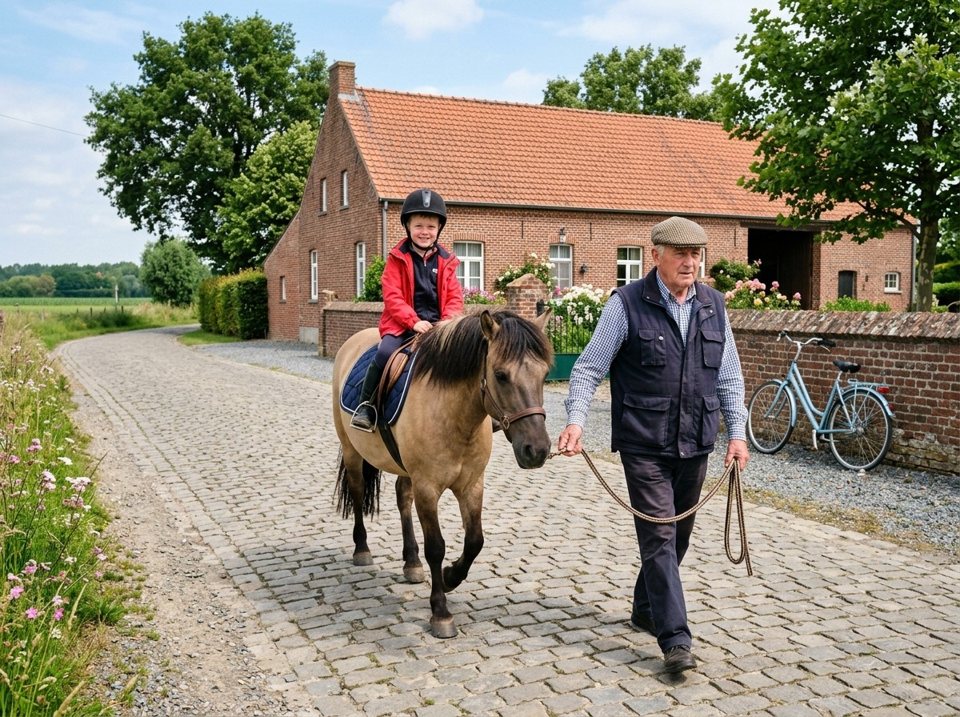
[L08_02_1.jpg] A person accompanying draft animals, farm animals, or horses on the public road is also considered a driver. For example, this man accompanying a young rider is a driver.
Anyone driving a vehicle, with or without a motor. Also anyone leading or guarding draught, pack or saddle animals or cattle.
Examplea horse rider or a farmer with cows.
Pushing a car or motorbike
Official source · art. 2.13 · last amended 2024-02-01Open the full article on Justel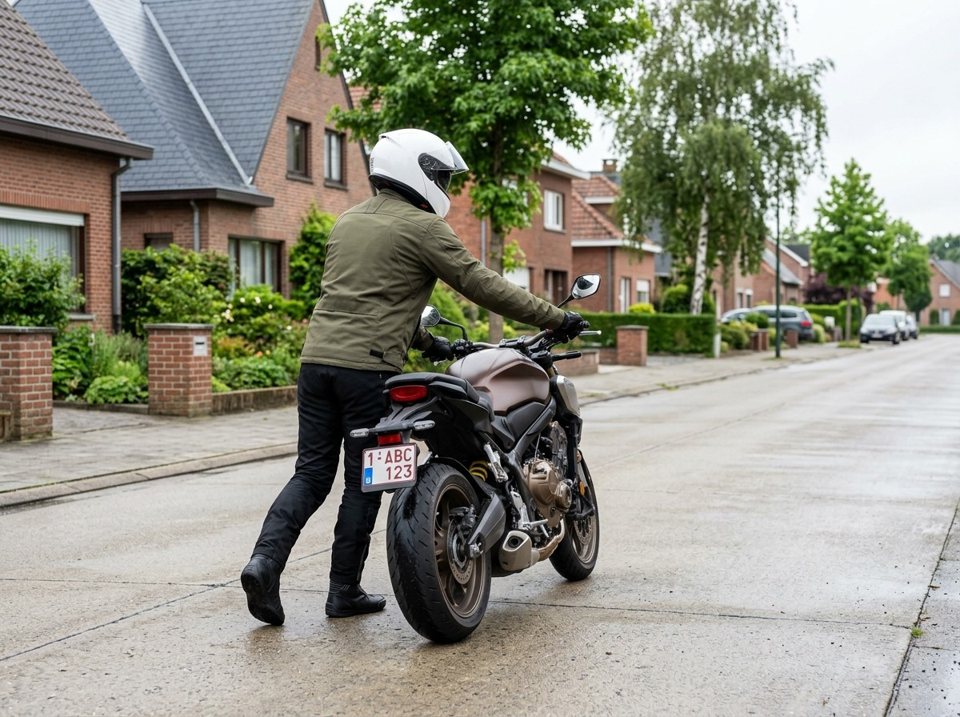
[anim:pushing-motorbike] Pushing a motorcycle
1 / 2
Someone pushing a car or motorcycle is a driver. They walk on the carriageway, need the right licence and, for a motorcycle, a helmet. Pushing a bicycle or two-wheeled moped makes you a pedestrian (see Lesson 4).
'Drivers' in the next lessons
Official source · art. 2.13 · last amended 2024-02-01Open the full article on JustelFrom now on, 'drivers' does not include pedestrians.
Section 2Vehicles and signs
Vehicles up to 3.5 tonnes
With a B licence you may drive a car, dual-use car, minibus or light truck with a maximum authorised mass up to 3,500 kg. The next lessons are mostly about these.
Signs for some vehicles only
Official source · art. 68.3 · last amended 2022-10-01Open the full article on JustelMany prohibition signs and rules apply only to certain types of vehicle.
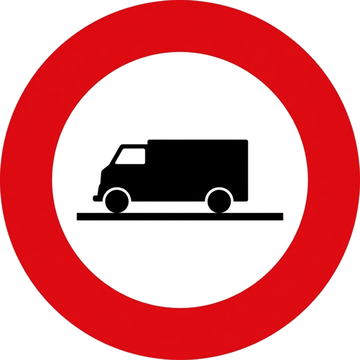 No goods vehicles
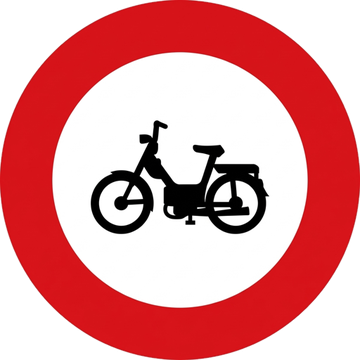 No mopeds
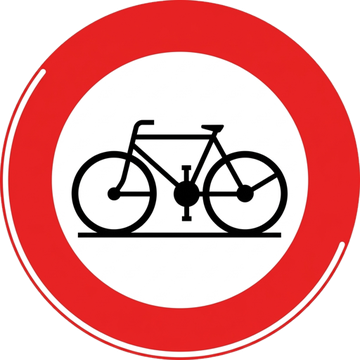 No cyclists
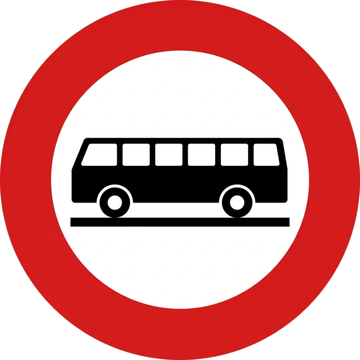 No coaches
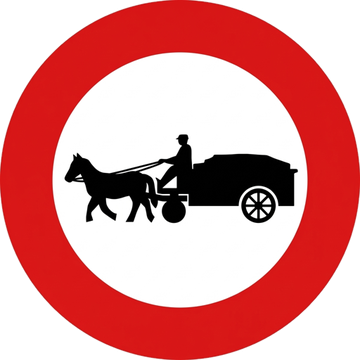 No animal-drawn vehicles
Section 3Trams and animals
Tram drivers
Official source · art. 1Dit reglement geldt voor het verkeer op de openbare weg en het gebruik ervan, door voetgangers, voertuigen, trek-, last- of rijdieren en vee.Open the full article on JustelOfficial source · art. 12.1 · last amended 2014-03-01Elke weggebruiker moet voorrang verlenen aan de spoorvoertuigen; daartoe moet hij zich zo snel mogelijk van de sporen verwijderen.Open the full article on Justel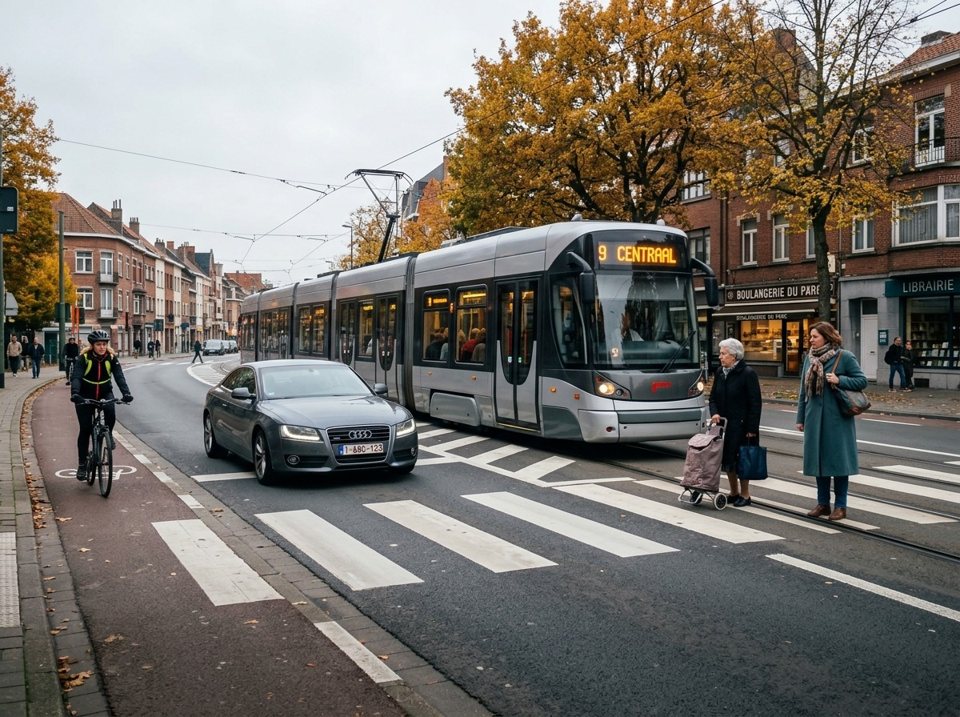
[anim:tram-zebra] A tram at a zebra crossing
1 / 2
Tram drivers do not fall under the road code. Everyone else must give way to a tram and clear the tracks as soon as possible. That is why a tram always goes first.
Animals on the road
Official source · art. 10.3 · last amended 2004-01-01Elke bestuurder moet vertragen wanneer hij trek-, last- en rijdieren of vee op de openbare weg nadert.Open the full article on Justel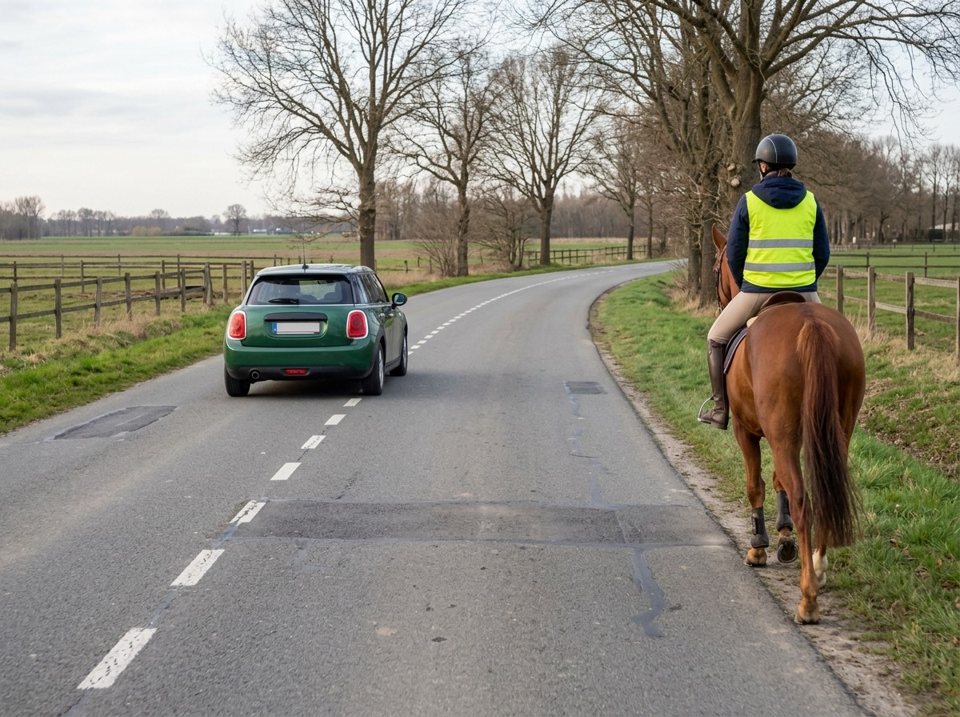
[anim:horse-rider] Approaching a horse and rider
1 / 2
Slow down at once when you see horses, cattle or pack animals. If a horse rears up, stop and avoid sudden moves so the rider can calm it.
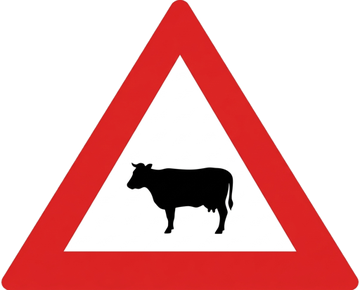 Cattle
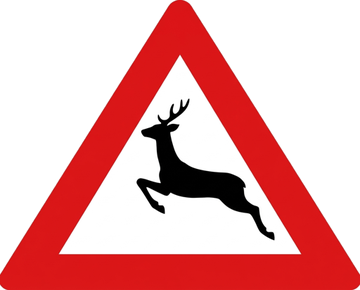 Wild animals crossing
Section 4Your licence and your hands
Temporary licence: night ban
With a temporary licence ('L') you may not drive from 22:00 to 06:00 on the nights before Saturday, Sunday and Monday, and the nights around public holidays.
Exampleno driving on Friday at 23:00.
Holding the wheel
Official source · art. 8.3 · last amended 2022-07-01Hij moet steeds in staat zijn alle nodige rijbewegingen uit te voeren en voortdurend zijn voertuig of zijn dieren goed in de hand hebben.Open the full article on Justel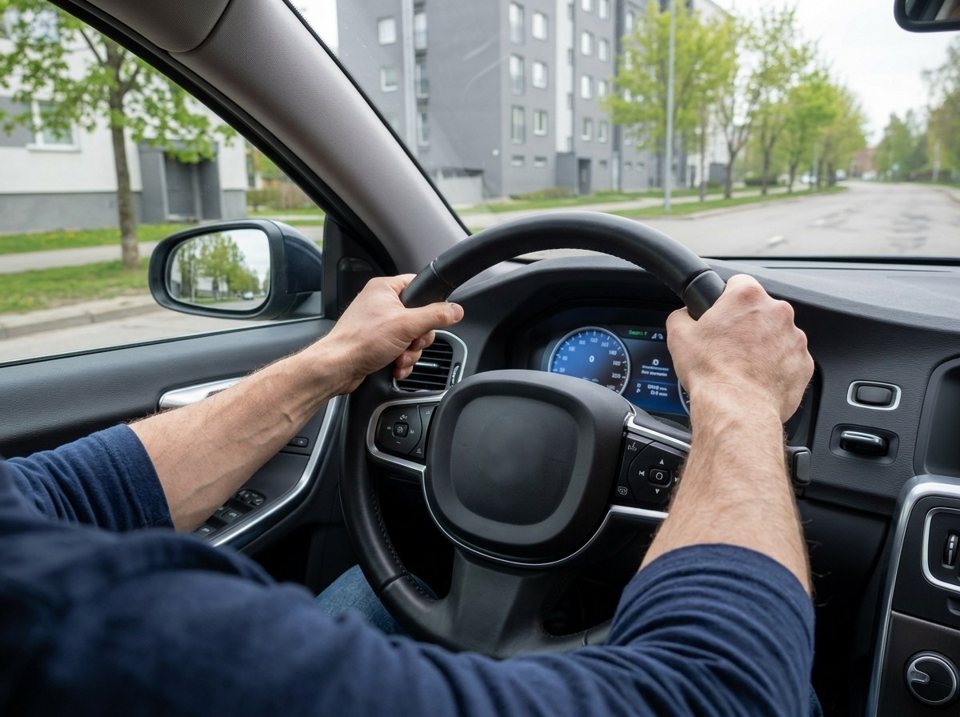
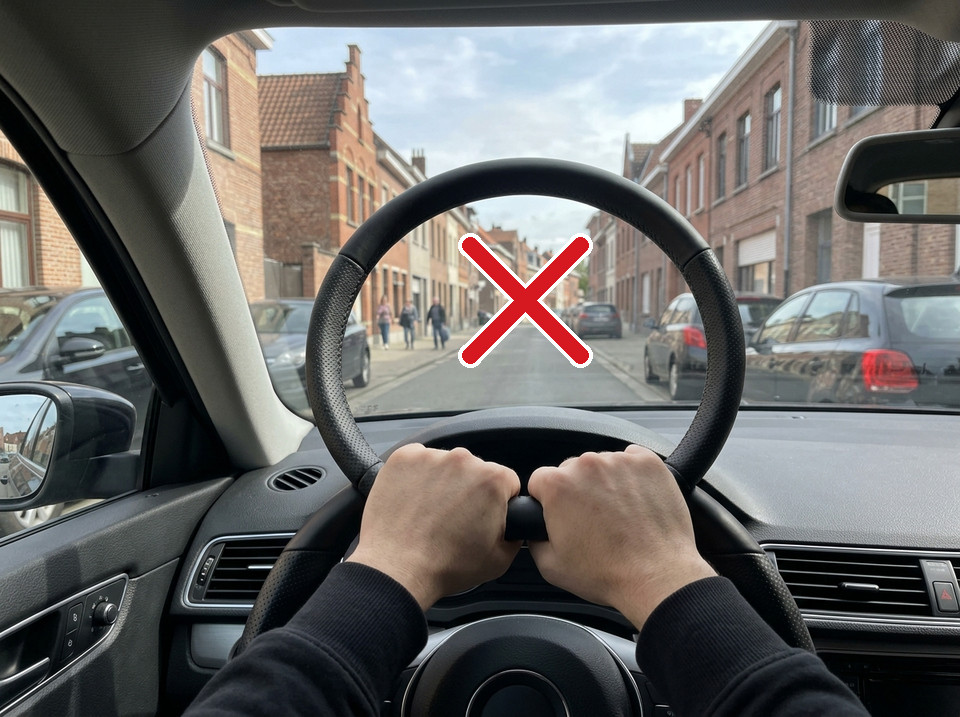
[L01_18_0.jpg] Hold the steering wheel with both hands at 'ten to two' or 'quarter to three'. Keep your arms slightly bent so you can make steering adjustments safely without removing your hands.
1 / 2
Both hands on the wheel at 'ten to two' or 'quarter to three', arms slightly bent. Then you can steer with small movements without letting go.
Test yourself
Pick a level. Questions you have not seen or got wrong come first.