Cyclists and cycle lanes
Know where cyclists ride, how to treat them, and the rules for bike streets and cyclist groups.
Section 1Cycle lanes and shared paths
Cycle lane
Official source · art. 2.7 · last amended 1991-01-01Het fietspad maakt geen deel uit van de rijbaan.Open the full article on Justel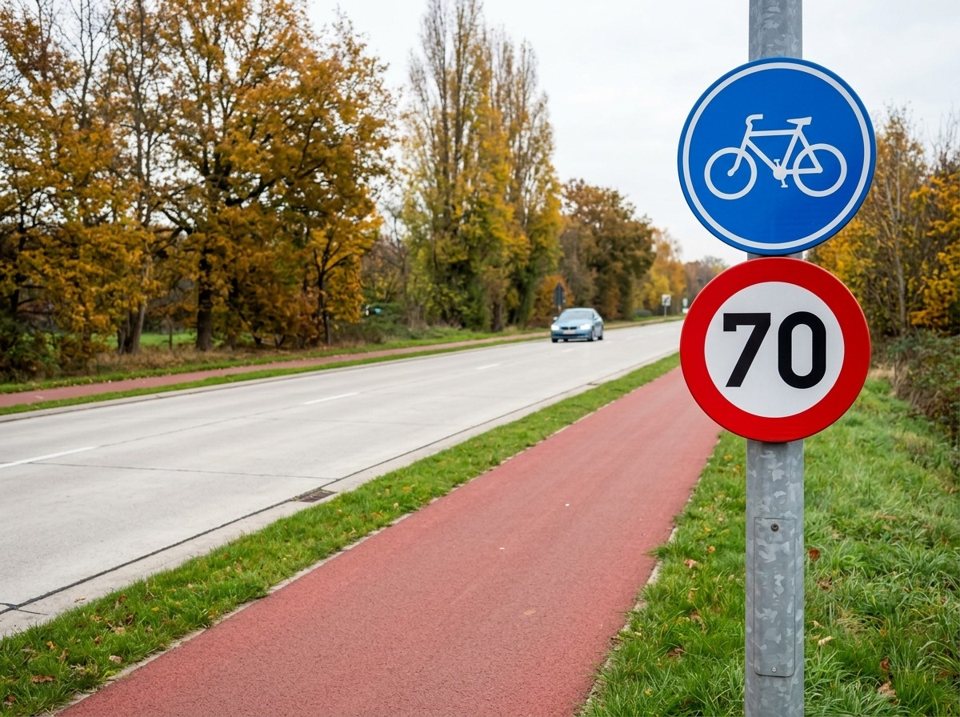
[L03_01_0.jpg] The round blue sign indicates a path reserved for cyclists and class A mopeds. Here, the cycle path is paved in red alongside the carriageway.
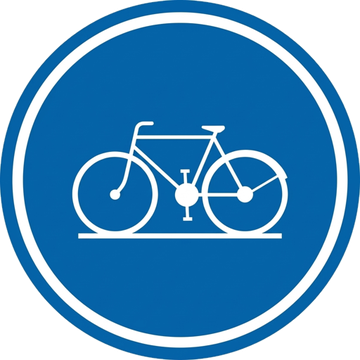 Obligatory bicycle lane.
Coloured strip without a sign (suggestion lane)
Official source · art. 74Het deel van de openbare weg dat afgebakend is door twee evenwijdige witte onderbroken strepen en dat niet breed genoeg is voor het autoverkeer, is een fietspad.Open the full article on Justel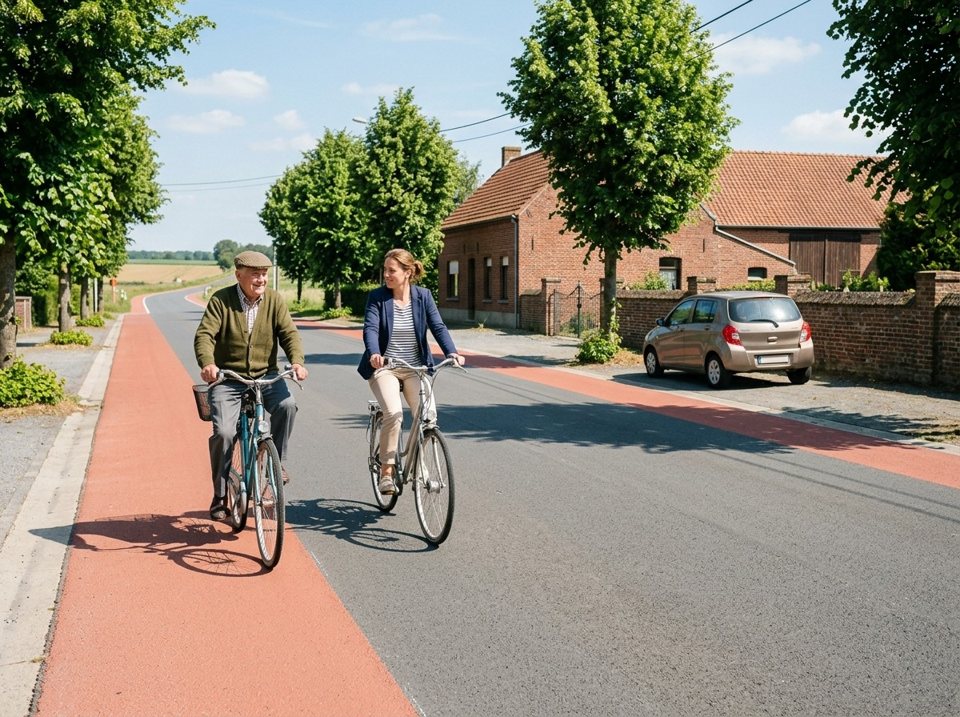
[L03_09_0.jpg] These red painted strips along the road are cycle suggestion lanes without white markings. They remain part of the carriageway, meaning motor vehicles are allowed to drive, stop, or park on them.
Shared path, symbols side by side
Official source · art. 69.3 · last amended 2010-01-01Deel van de openbare weg voorbehouden voor het verkeer van voetgangers, van fietsen en van tweewielige bromfietsen klasse A.Open the full article on Justel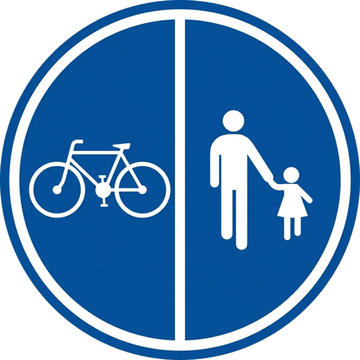 Segregated route for, on the one side for pedestrians, on the other for cyclists and class A mopeds.
Shared path, symbols one above the other
Official source · art. 69.3 · last amended 2010-01-01Deel van de openbare weg voorbehouden voor het verkeer van voetgangers, van fietsen en van tweewielige bromfietsen klasse A.Open the full article on Justel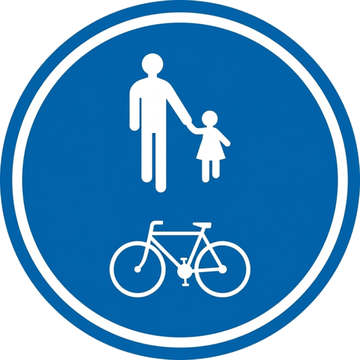 Shared path, single sign
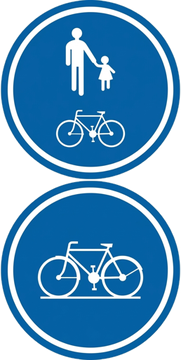 Pedestrians and cyclists only
White plates for mopeds
Official source · art. 69.4 · last amended 2016-10-01Een onderbord van het model M.6. bedoeld in artikel 65.2 moet het verkeersbord D7 aanvullen wanneer het fietspad moet gevolgd worden door de bestuurders van tweewielige bromfietsen klasse B.Open the full article on Justel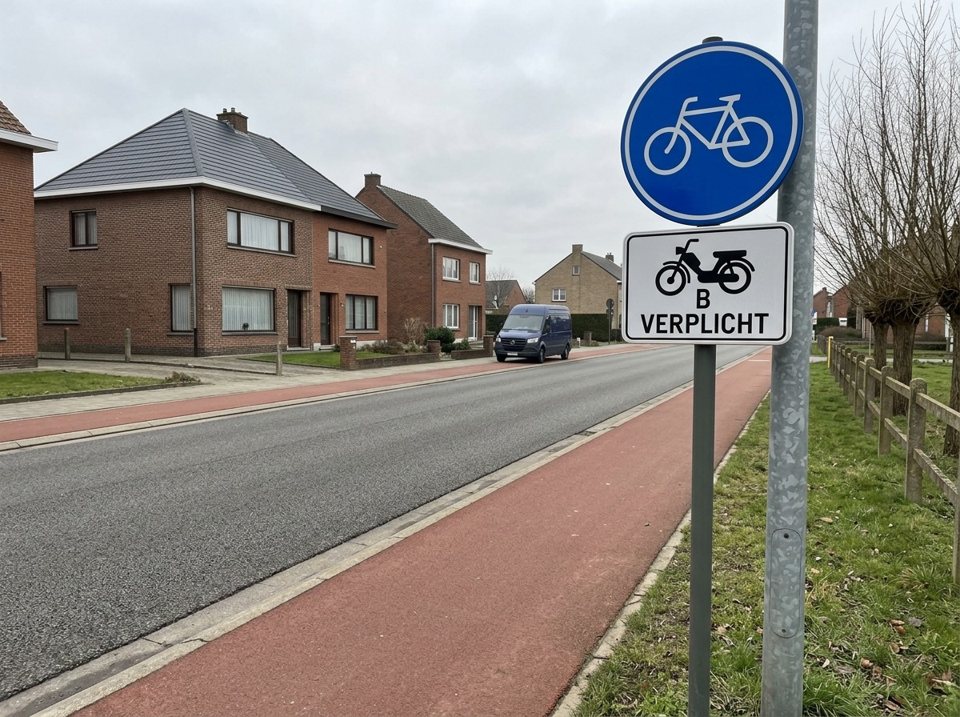
[L03_04_0.jpg] The white underplate with 'B VERPLICHT' beneath the blue cycle path sign indicates that class B mopeds are obligated to use this cycle track.
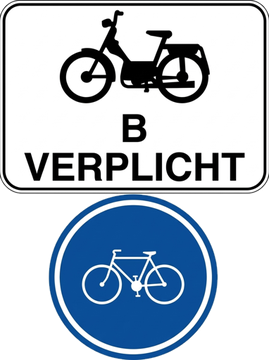 B mopeds must use it
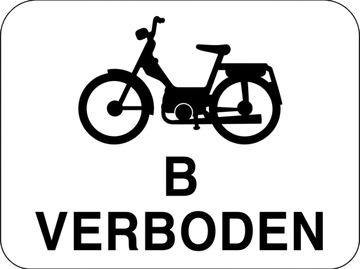 B mopeds may not use it
Where cyclists ride
Official source · art. 9.1.2 · last amended 2022-10-01de fietsers van minder dan 10 jaar mogen in alle omstandigheden de trottoirs en de verhoogde bermen volgen.Open the full article on JustelSection 2Where cyclists cross or join the road
Cyclist crossing
Official source · art. 76.4De oversteekplaatsen die de fietsers en bestuurders van tweewielige bromfietsen moeten volgen om de rijbaan over te steken, worden afgebakend door twee onderbroken strepen gevormd door witte vierkanten of parallellogrammen.Open the full article on Justel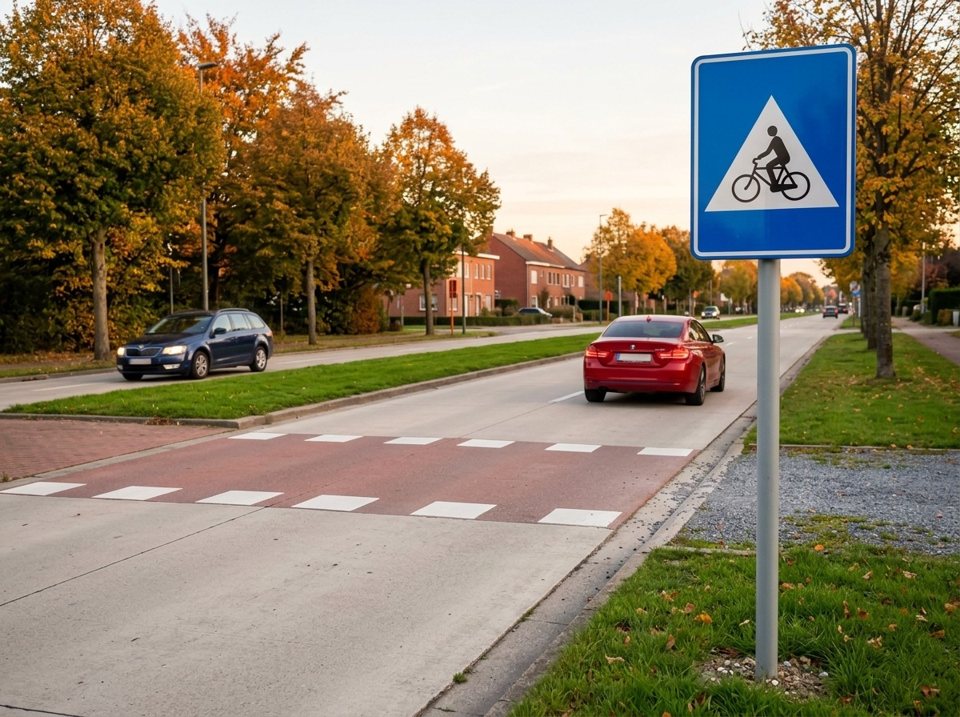
[L03_07_0.jpg] The blue traffic sign is placed next to a crossing for cyclists and two-wheeled mopeds.
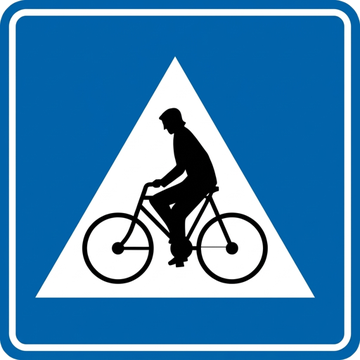 Sign at the crossing
At a cyclist crossing
Official source · art. 40terHij mag een oversteekplaats voor fietsers en bestuurders van tweewielige bromfietsen slechts met matige snelheid naderen teneinde de weggebruikers die er zich op bevinden, niet in gevaar te brengen en ze niet te hinderen wanneer zij het oversteken van de rijbaan met normale snelheid beëindigen.Open the full article on JustelEnd of a cycle lane
Official source · art. 66.4 · last amended 2022-10-01Open the full article on JustelOfficial source · art. 12.4 · last amended 2014-03-01Wordt niet als manoeuvre beschouwd : zich op het einde van een fietspad op de rijbaan begeven om rechtdoor te rijden [ of van rijstrook of van file veranderen bij het ritsen bedoeld in artikel 12bis] .Open the full article on Justel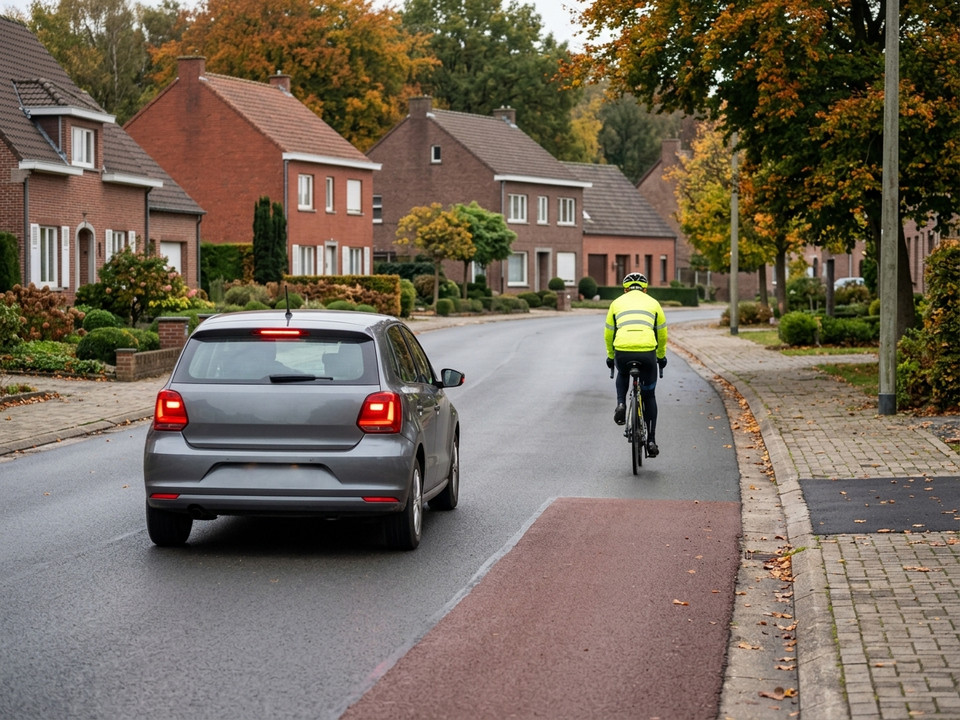
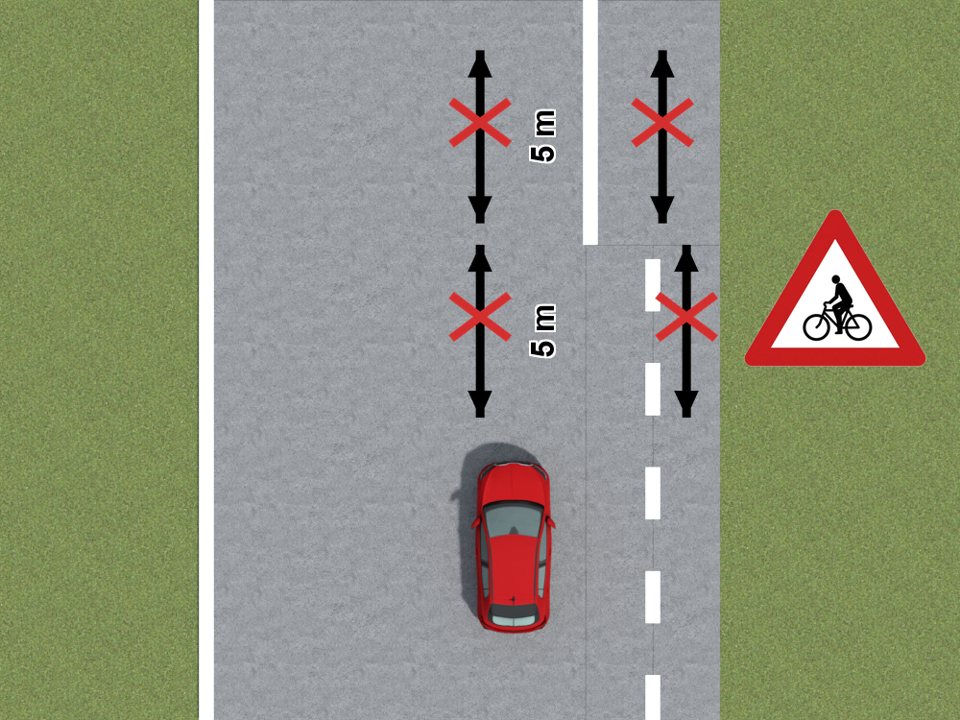
[anim:cycle-lane-ends] A cycle lane that ends
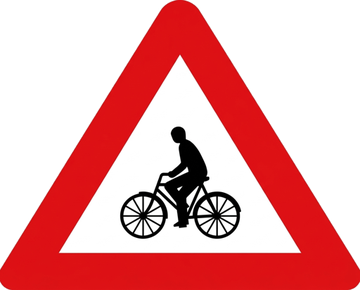 1. Crossing for cyclists and moped drivers (!: placed 150m in front of the crossing) 2. Crossing for cyclists and moped drivers at a place where a bicycle lane emerges onto a road (!: placed at the crossing)
Section 3Bike streets and cyclist groups
Bike street / bike zone
Official source · art. 22noviesOpen the full article on Justel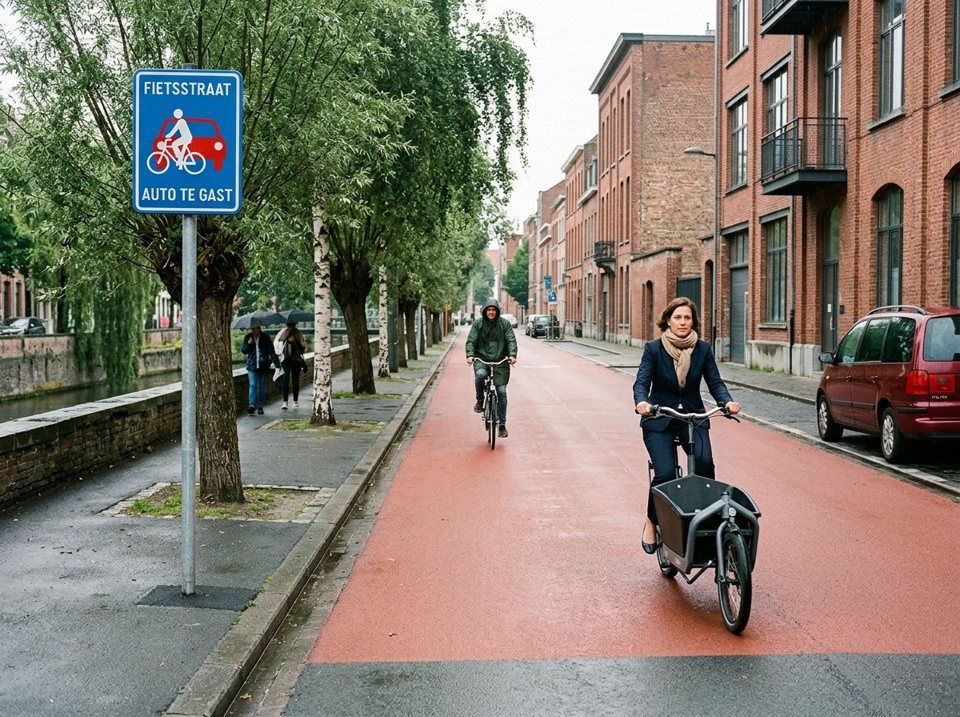
[anim:bike-street] A bike street
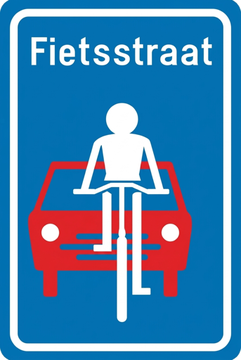 Start of bike street
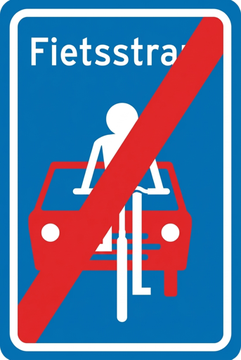 End of bike street
Groups of 15 to 50 cyclists
Official source · art. 43bis.2.1 · last amended 2004-01-01De wielertoeristen die in een groep van ten minste 15 tot ten hoogste 50 deelnemers rijden, zijn niet verplicht de fietspaden te volgen en zij mogen bestendig met twee naast elkaar op de rijbaan rijden op voorwaarde dat zij gegroepeerd blijven.Open the full article on JustelOfficial source · art. 43bis.2.2 · last amended 2004-01-01Zij mogen voorafgegaan en gevolgd worden, op een afstand van ongeveer 30 meter, door een begeleidende auto; indien er slechts één begeleidende auto is, moet deze de groep volgen.Open the full article on Justel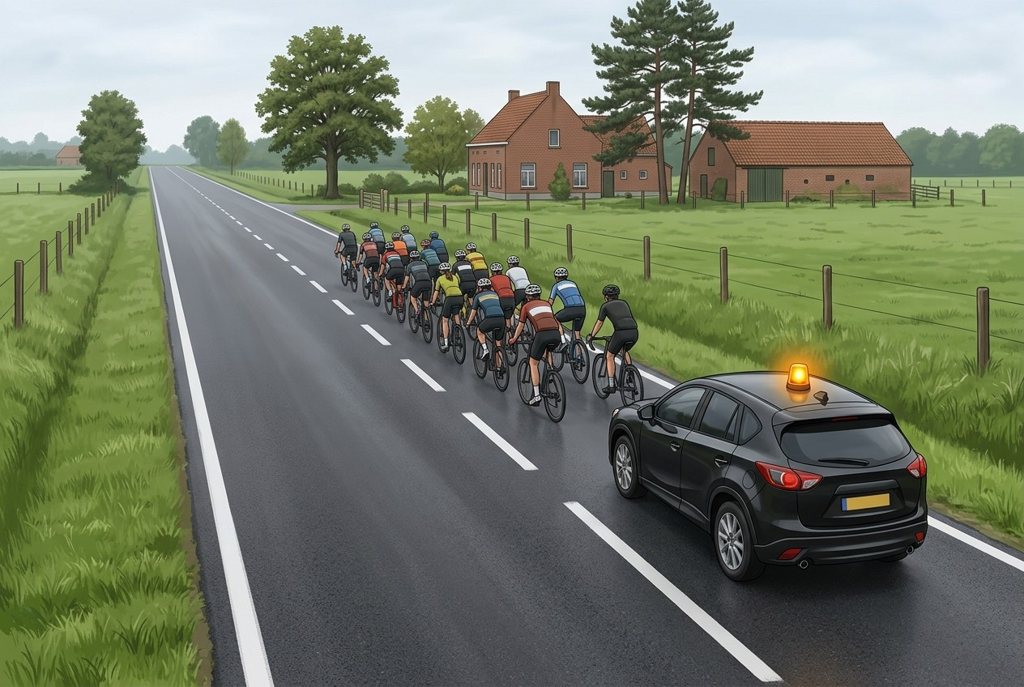
[anim:cyclist-group] A group of cyclists
Groups of 51 to 150 cyclists
Official source · art. 43bis.1 · last amended 2004-01-01De groepen van meer dan 50 deelnemers moeten worden vergezeld door ten minste twee wegkapiteins.Open the full article on Justel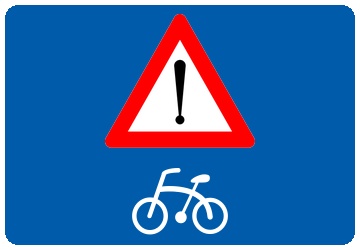 Escort car roof board
Cyclist groups at junctions
Official source · art. 43bis.3.3 · last amended 2004-01-01Op de kruispunten waar het verkeer niet geregeld wordt door verkeerslichten, mag ten minste één van de wegkapiteins het verkeer in de dwarswegen stilleggen op de wijze bepaald in artikel 41.3.2., terwijl de groep met inbegrip van de twee begeleidende voertuigen oversteekt.Open the full article on JustelTest yourself
Pick a level. Questions you have not seen or got wrong come first.