The public road and the carriageway
Which places the traffic rules cover, what the carriageway is, where you must drive, and a few basics about your licence.
Public road vs public area vs private area
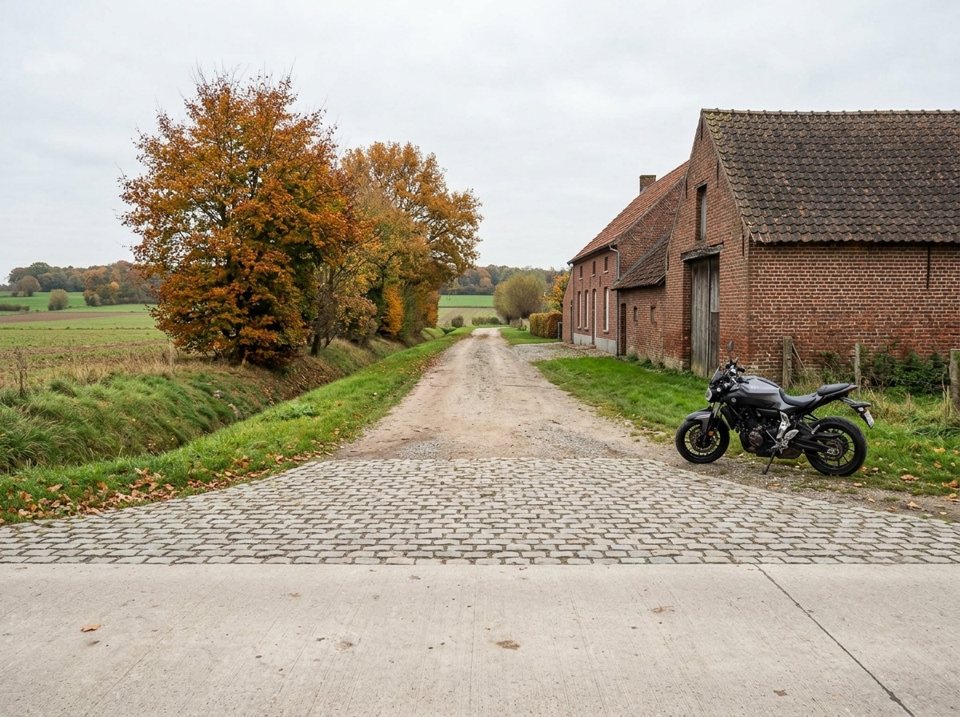
A path or dirt track is a public road if anyone is allowed to use it without having to explain why. A private space is a non-public area that requires permission to enter.
§Official source · art. 1
Dit reglement geldt voor het verkeer op de openbare weg en het gebruik ervan, door voetgangers, voertuigen, trek-, last- of rijdieren en vee.
Open the full article on JustelPublic area
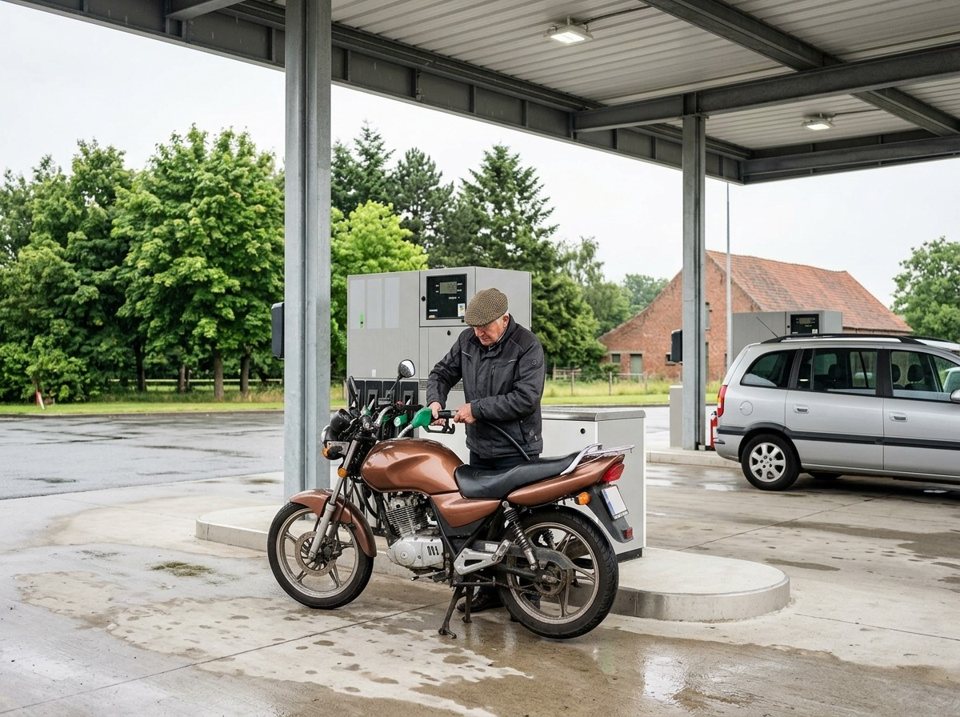
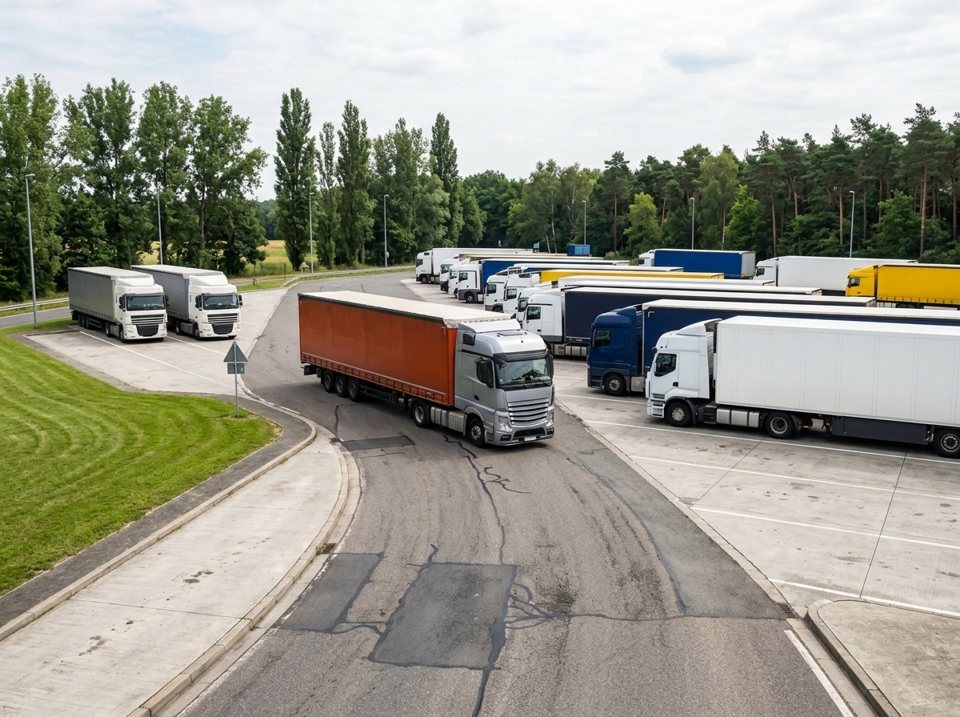
A petrol station is a public area that you may only enter if you have a reason, such as refuelling this motorcycle. You are not allowed to drive through it simply as a shortcut.
Non-public area
§Official source · art. 1
Dit reglement geldt voor het verkeer op de openbare weg en het gebruik ervan, door voetgangers, voertuigen, trek-, last- of rijdieren en vee.
Open the full article on JustelWhere the traffic code applies
§Official source · art. 1
Dit reglement geldt voor het verkeer op de openbare weg en het gebruik ervan, door voetgangers, voertuigen, trek-, last- of rijdieren en vee.
Open the full article on JustelPrivate road
§Official source · art. 1
Dit reglement geldt voor het verkeer op de openbare weg en het gebruik ervan, door voetgangers, voertuigen, trek-, last- of rijdieren en vee.
Open the full article on JustelTram drivers
§Official source · art. 12.1 · last amended 2014-03-01
Elke weggebruiker moet voorrang verlenen aan de spoorvoertuigen; daartoe moet hij zich zo snel mogelijk van de sporen verwijderen.
Open the full article on JustelParts of the public road
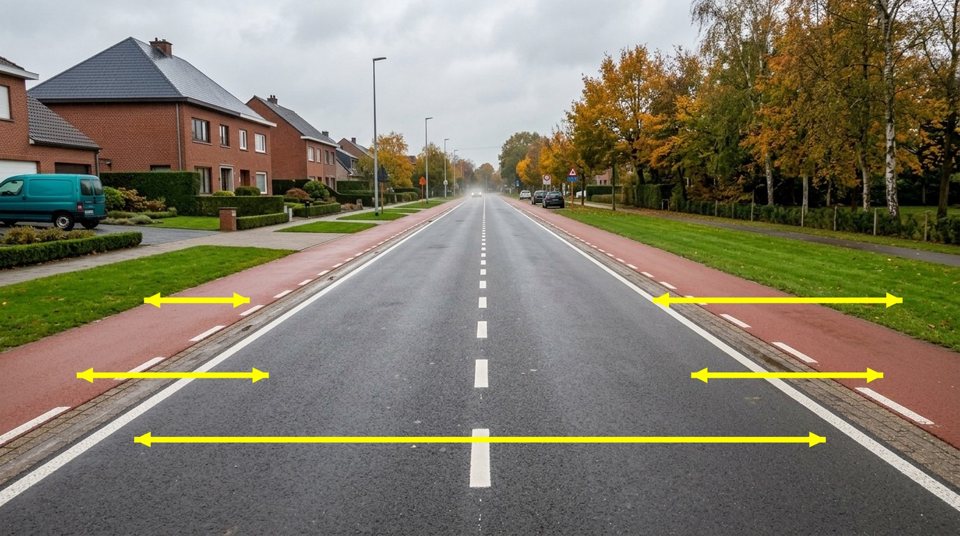
The public road comprises more than just the carriageway. The red cycle tracks and the grass verges on either side are also integral parts of the public road.
§Official source · art. 2.1 · last amended 2024-02-01
" Rijbaan ", het deel van de openbare weg dat voor het voertuigenverkeer in het algemeen is ingericht.
Open the full article on JustelThe carriageway
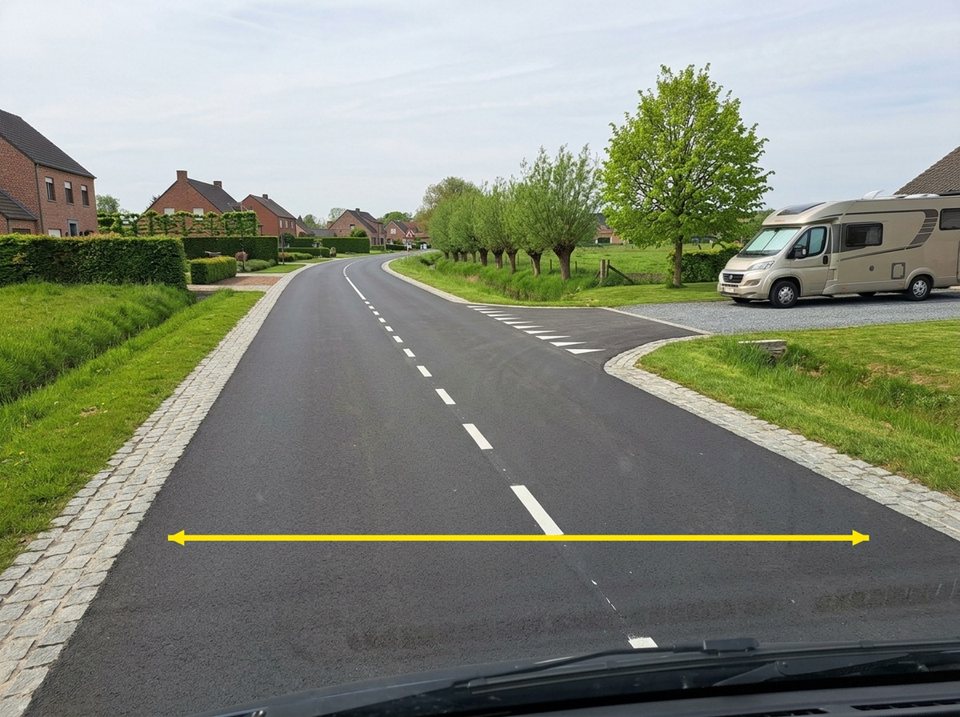
The yellow arrow indicates the carriageway, the hardened surface of the public road designed for vehicular traffic.
§Official source · art. 2.1 · last amended 2024-02-01
" Rijbaan ", het deel van de openbare weg dat voor het voertuigenverkeer in het algemeen is ingericht.
Open the full article on JustelWhite line along the edge
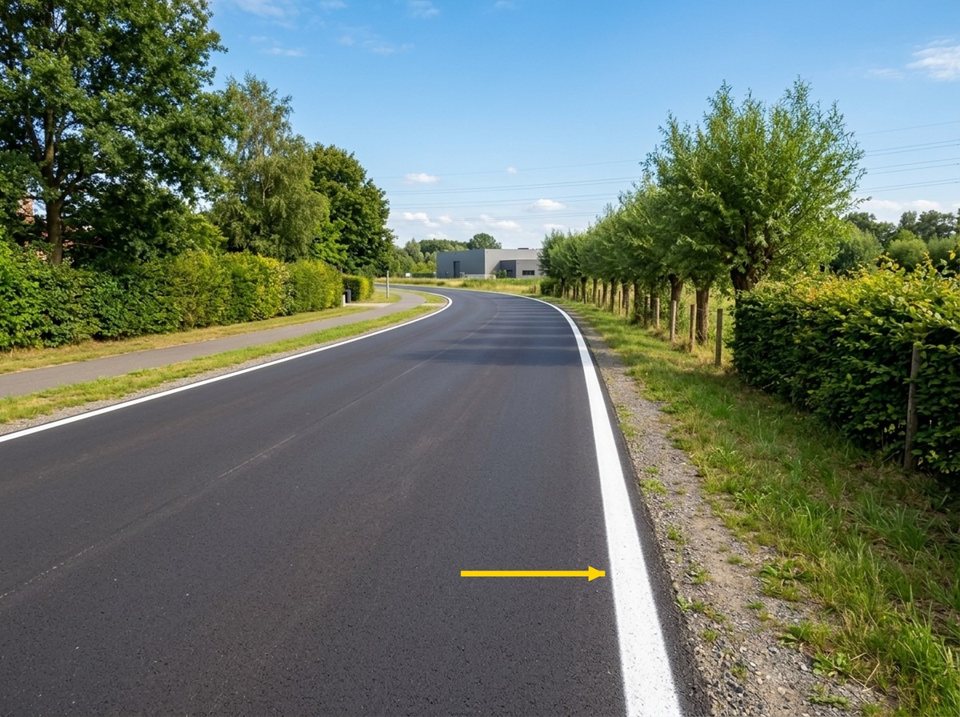
The continuous white line painted along the road edge marks where the carriageway ends. It indicates the boundary of the carriageway and has no other legal meaning.
§Official source · art. 75.1.1° · last amended 2022-10-01
Een witte doorlopende streep mag op de werkelijke rand van de rijbaan, op een trottoirband of op de boordsteen van een verhoogde berm aangebracht worden om deze beter zichtbaar te maken.
Open the full article on JustelWhere you must drive
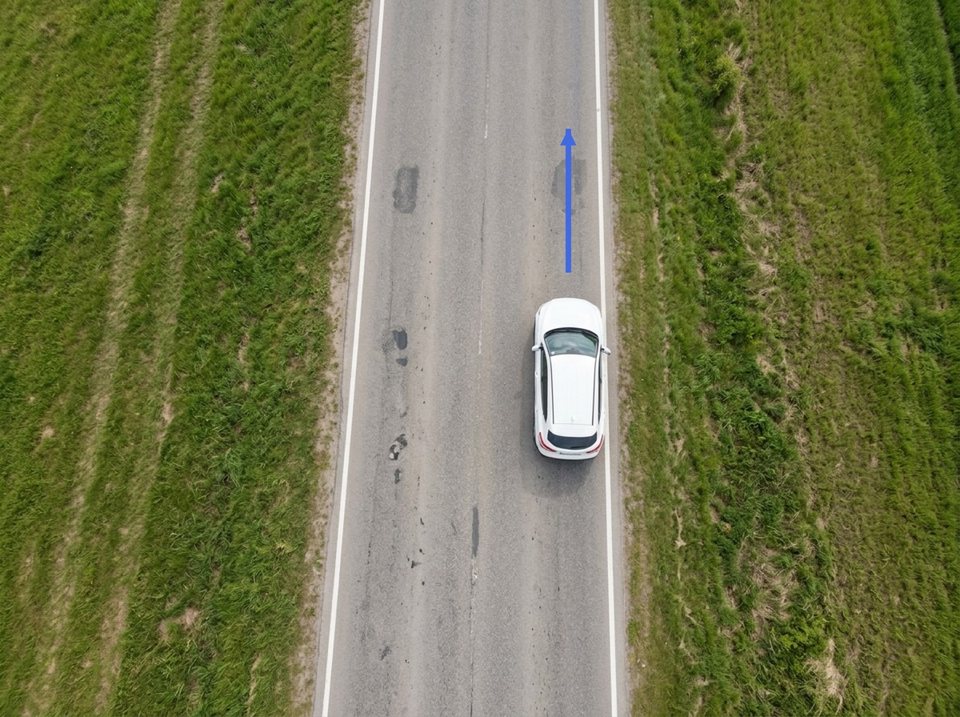
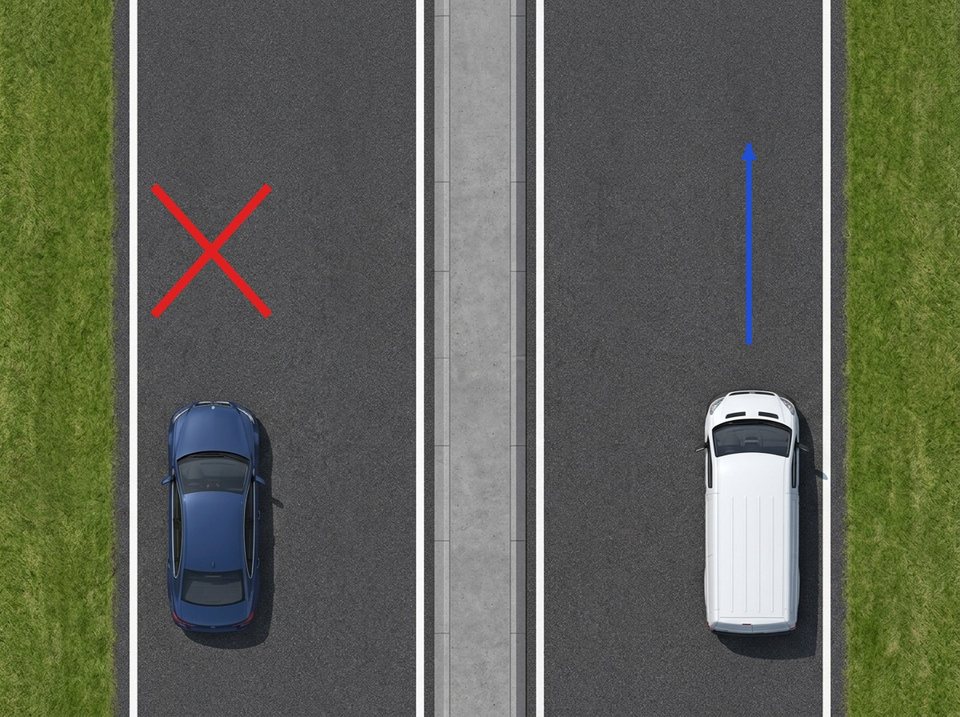
Passing oncoming traffic
§Official source · art. 9.3.1 · last amended 2004-04-30
Elke bestuurder die de rijbaan volgt moet zo dicht mogelijk bij de rechterrand van die rijbaan blijven
Open the full article on JustelNormal maximum speed
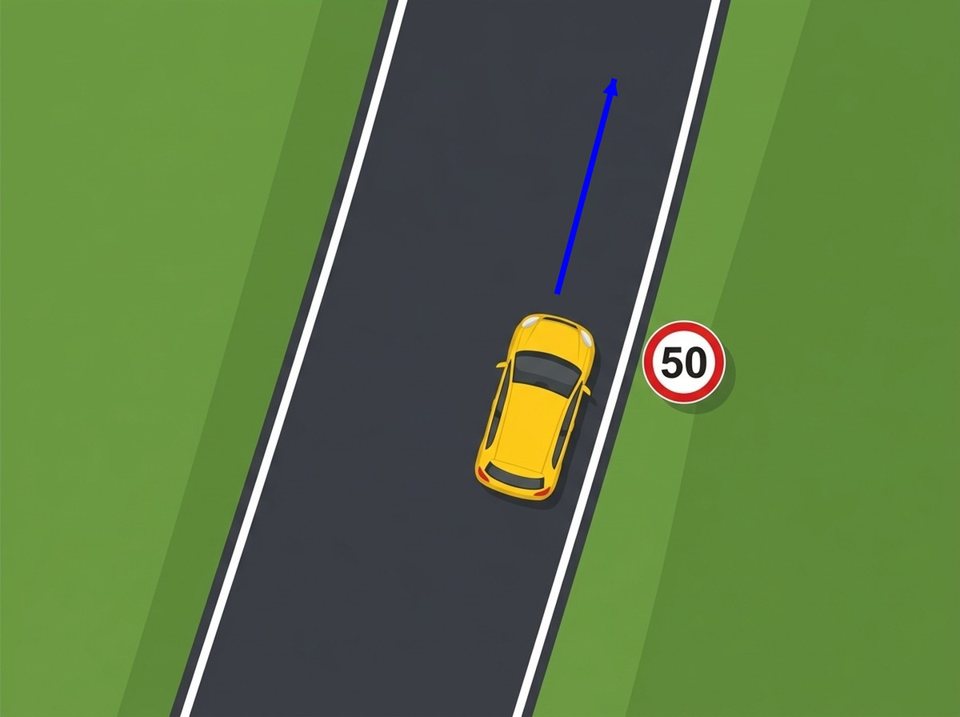
A yellow car drives on a carriageway past a 50 km/h speed limit sign. The normal maximum speed limit on a regular carriageway is 70 km/h in Flanders and Brussels, and 90 km/h in Wallonia.
§Official source · art. 11.2 · last amended 2018-04-01
Central lane
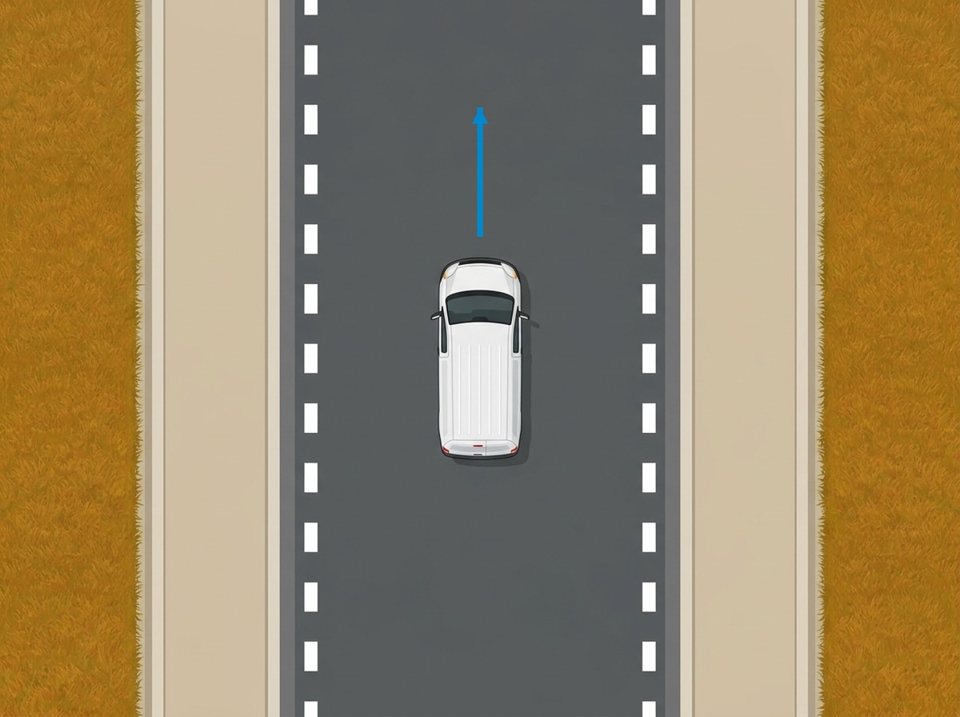
A central road
§Official source · art. 15.3 · last amended 2022-10-01
Speed on a central lane
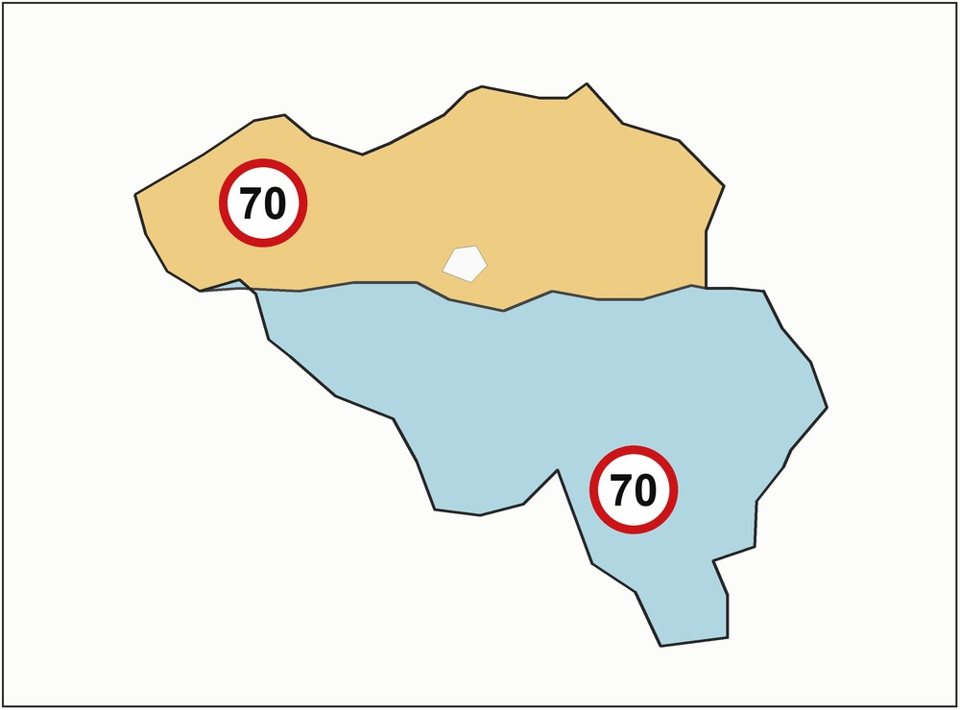
On a road with a central lane, the maximum permitted speed is 70 km/h across all Belgian regions.
§Official source · art. 11.2 · last amended 2018-04-01
3° tot 70 km per uur op de middenrijbaan.
Open the full article on JustelSide lane
§Official source · art. 9.1.1 · last amended 2022-10-01
Wanneer de openbare weg een rijbaan omvat moeten de bestuurders deze rijbaan volgen.
Open the full article on JustelWho uses the side lane
§Official source · art. 9.1.2.4° · last amended 2022-10-01
Op voorwaarde rechts in de rijrichting te rijden en voorrang te verlenen aan de voetgangers die zich op dit deel van de openbare weg bevinden, mogen bestuurders van rijwielen, bromfietsen klasse A, speed pedelecs, niet ingespannen trekdieren, last- of rijdieren of vee de zijdelingse strook volgen.
Open the full article on JustelAnimals on the road
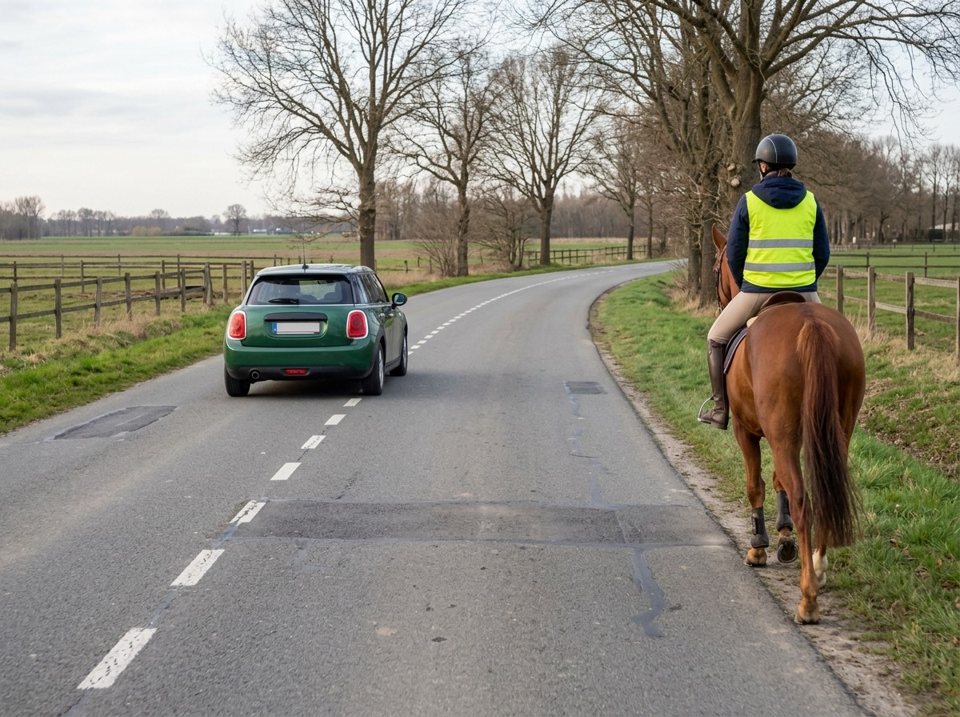
Approaching a horse and rider
§Official source · art. 10.3 · last amended 2004-01-01
Elke bestuurder moet vertragen wanneer hij trek-, last- en rijdieren of vee op de openbare weg nadert.
Open the full article on JustelTemporary licence: night ban
Holding the steering wheel
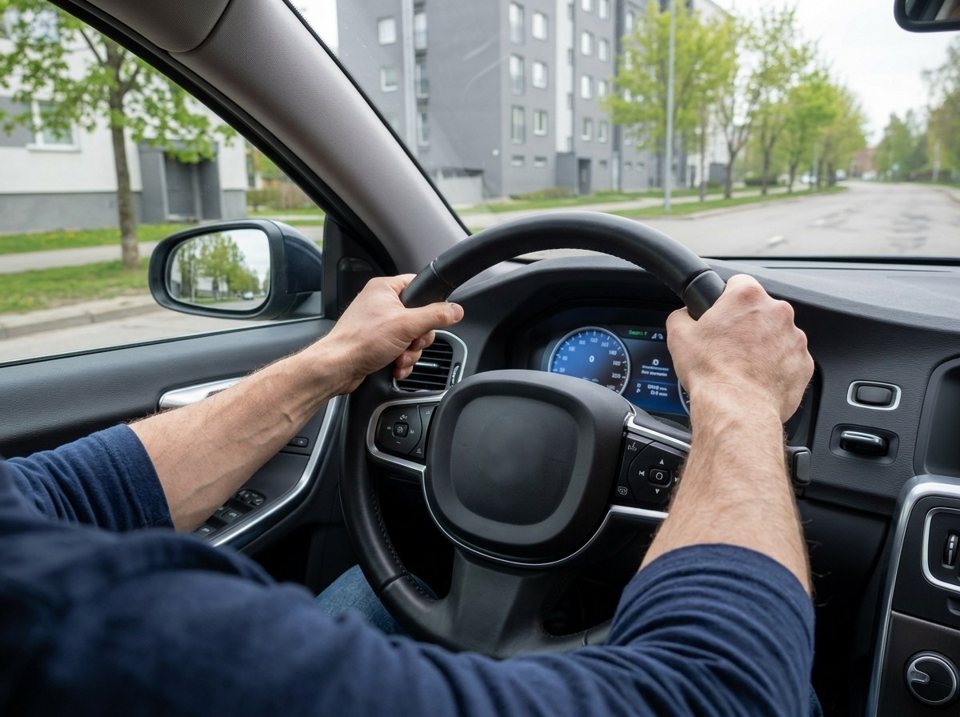
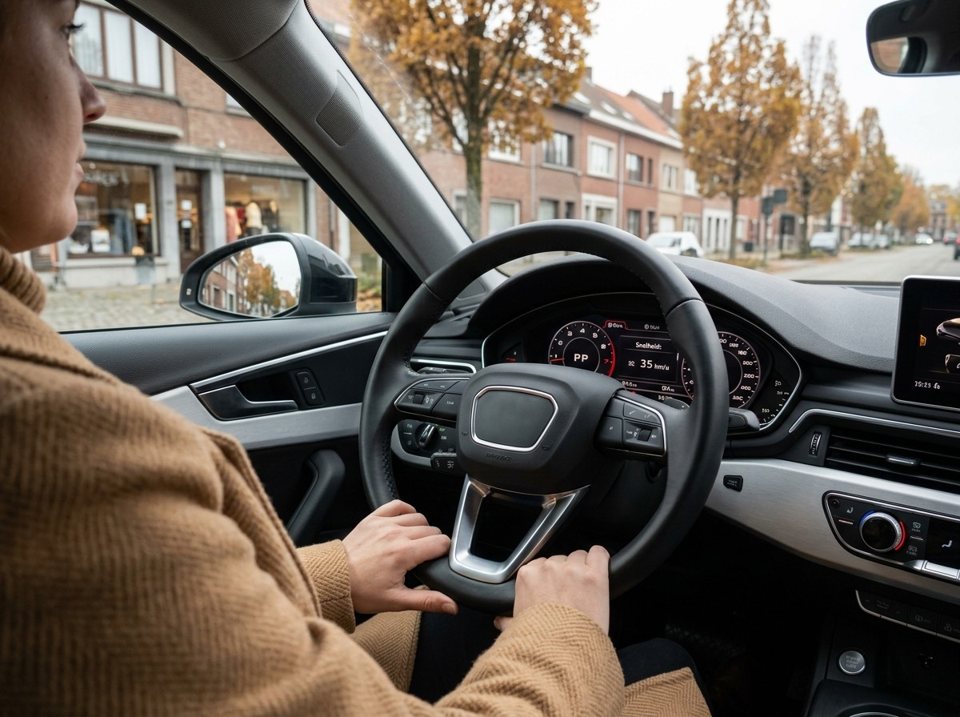
Hold the steering wheel with both hands at 'ten to two' or 'quarter to three'. Keep your arms slightly bent so you can make steering adjustments safely without removing your hands.
§Official source · art. 8.3 · last amended 2022-07-01
Hij moet steeds in staat zijn alle nodige rijbewegingen uit te voeren en voortdurend zijn voertuig of zijn dieren goed in de hand hebben.
Open the full article on JustelMedically unfit to drive
Signs in this lesson
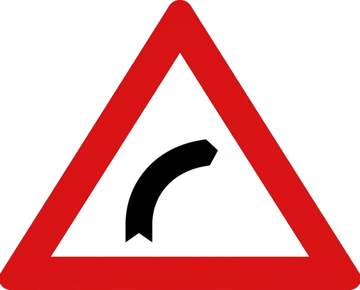 Warning (or danger sign)Dangerous bend to the right.
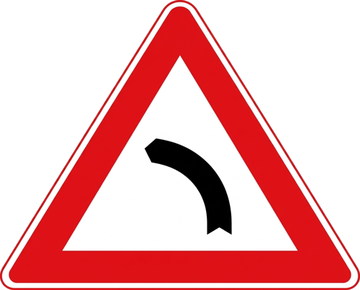 Warning (or danger sign)Dangerous bend to the left.
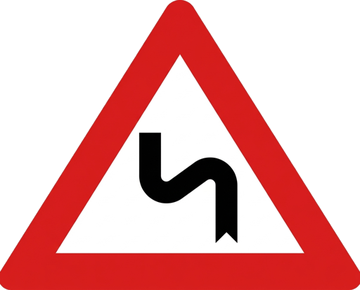 Warning (or danger sign)Two or more bends, the first to the left.
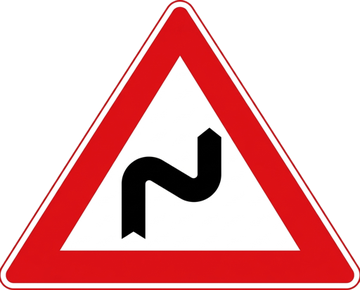 Warning (or danger sign)Two or more bends, the first to the right.
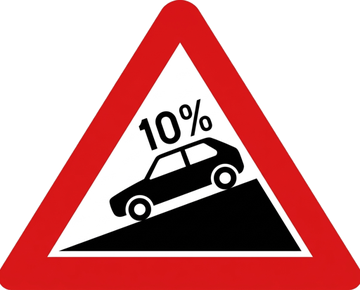 Warning (or danger sign)Steep hill downwards.
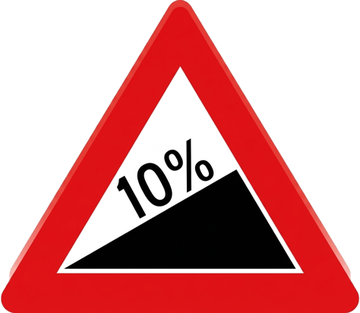 Warning (or danger sign)Steep hill upwards.
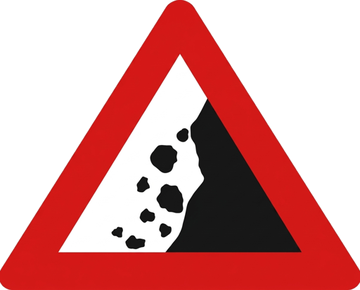 Warning (or danger sign)Falling rocks.
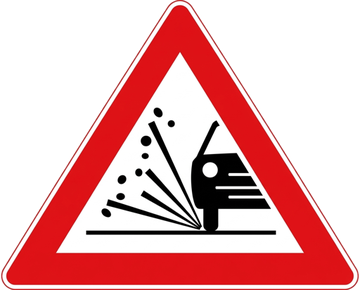 Warning (or danger sign)Loose gravel.
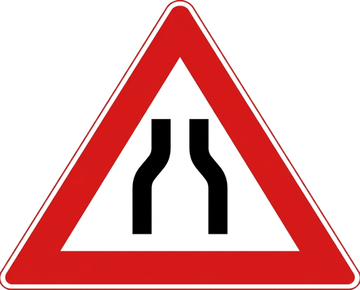 Warning (or danger sign)Road narrows on both sides.
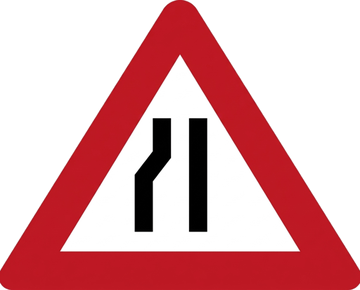 Warning (or danger sign)Road narrows on the left.
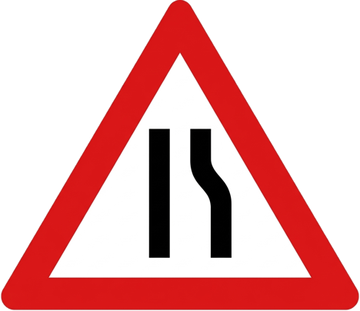 Warning (or danger sign)Road narrows on the right.
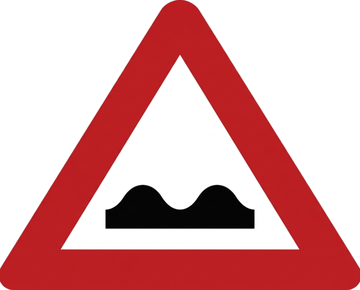 Warning (or danger sign)Uneven road.
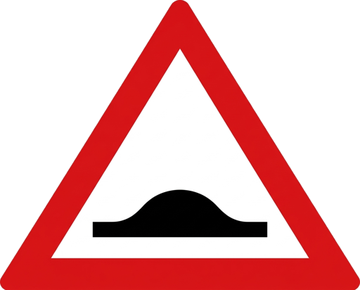 Warning (or danger sign)Speed hump(s).
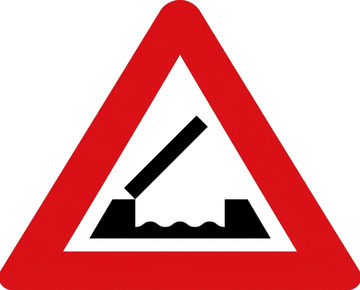 Warning (or danger sign)Opening or swing bridge ahead.
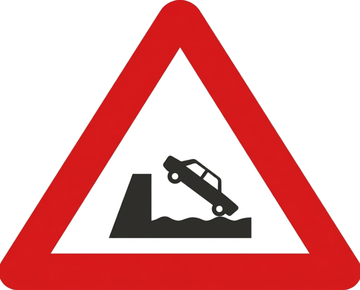 Warning (or danger sign)Way out on a quay or a riverbank.
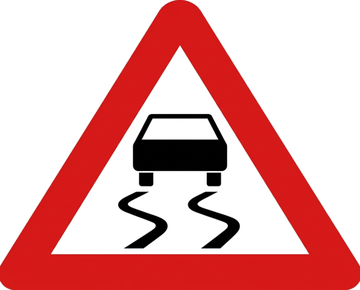 Warning (or danger sign)Slippery road.
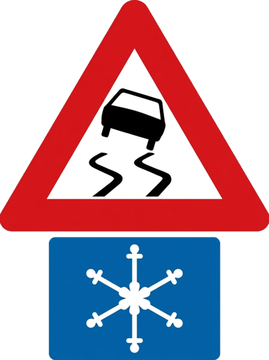 Warning (or danger sign)Slippery road due to ice or snow.
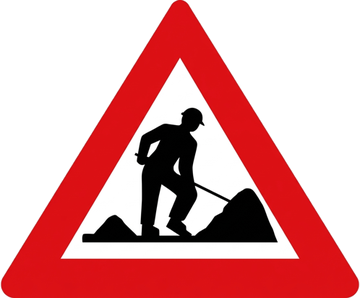 Warning (or danger sign)Road works.
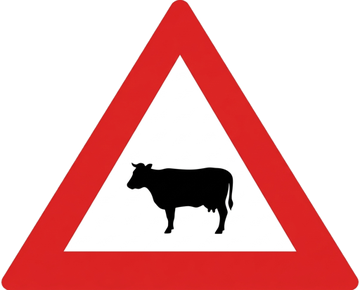 Warning (or danger sign)Passage of cattle.
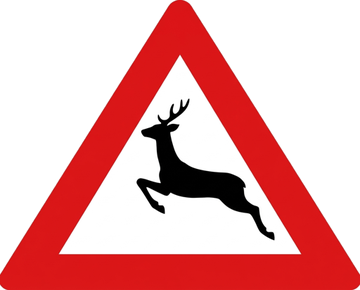 Warning (or danger sign)Big game crossing.
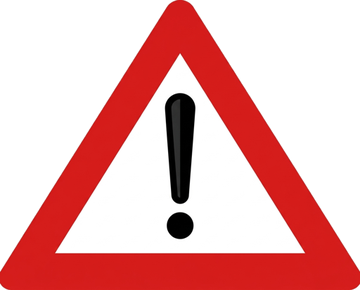 Warning (or danger sign)Danger. A plate indicates the nature of the hazard.
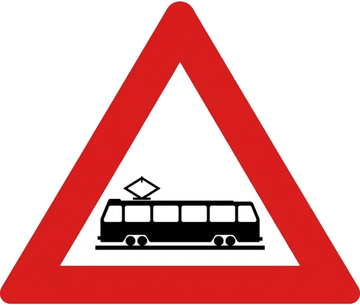 Warning (or danger sign)Crossing of a public road by one or more tracks in the carriageway.
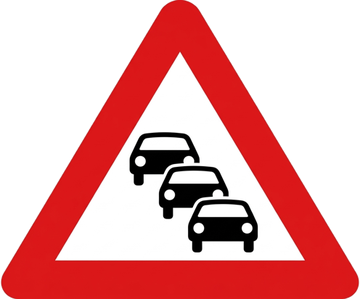 Warning (or danger sign)Traffic jam
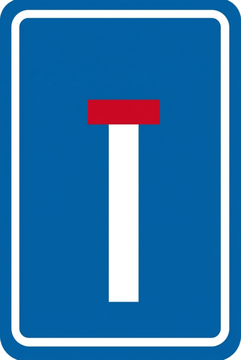 Information (or informative or indication sign)No through road to all road users.
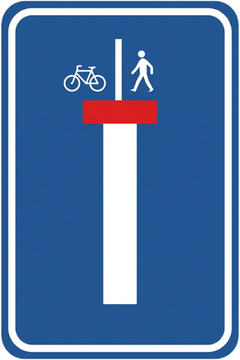 Information (or informative or indication sign)No through road except for cyclists and pedestrians.
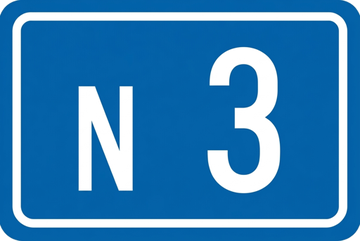 Information (or informative or indication sign)Road number
Test yourself
Pick a level. Questions you have not seen or got wrong come first.