The lanes
How the road is split into lanes, what the white lines allow, zip merging, bus lanes and roadworks.
Lanes
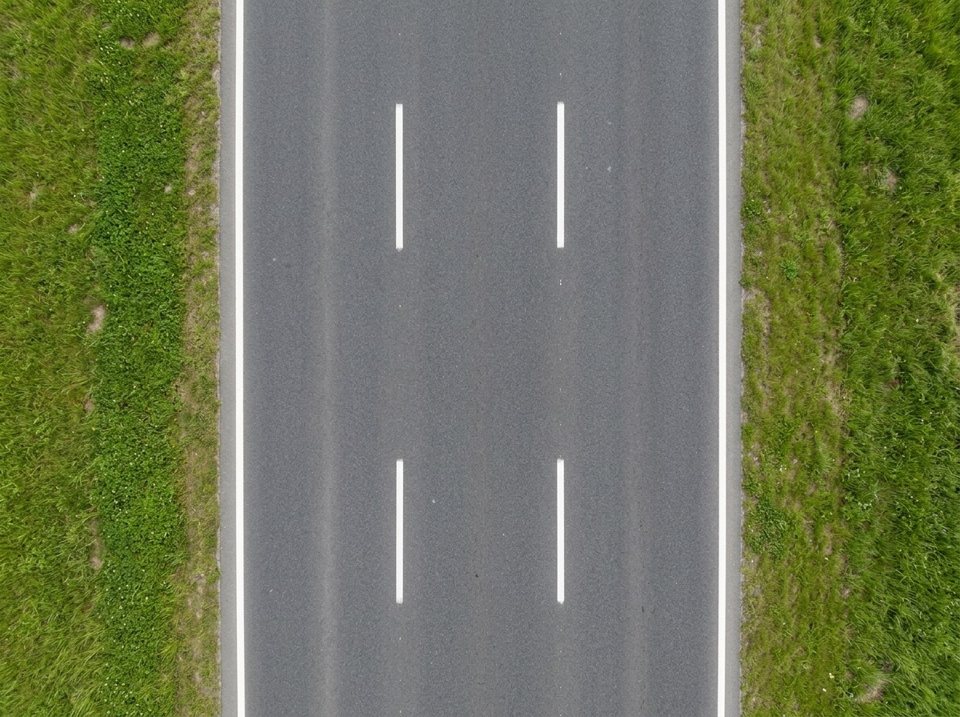
Broken white lines divide this carriageway into three lanes.
§Official source · art. 2.2 · last amended 2003-06-01
Arrows on the lanes
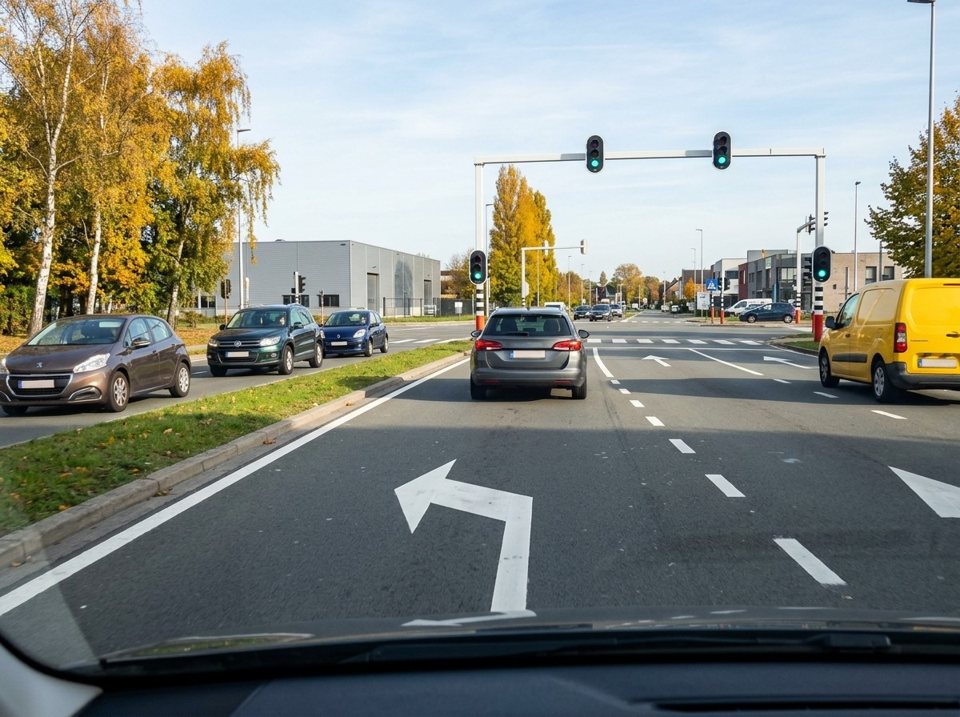
The painted arrow on the road surface shows the direction you must follow at the junction, meaning drivers in this lane must turn left.
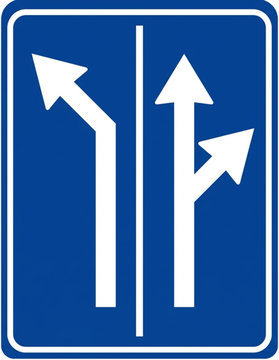 Advance warning or arrow markings, showing your choice of lane. This sign can indicate the different directions. The white line may be broken or solid.
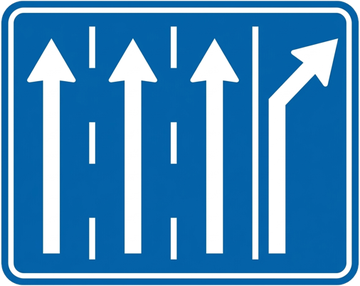 Advance warning or arrow markings, showing your choice of lane. This sign can indicate the different directions. The white line may be broken or solid.
§Official source · art. 77.1 · last amended 2022-10-01
Op het kruispunt moeten de bestuurders bovendien de of een van de richtingen volgen die aangewezen zijn op de rijstrook waarin zij zich bevinden.
Open the full article on JustelWhich lane to use
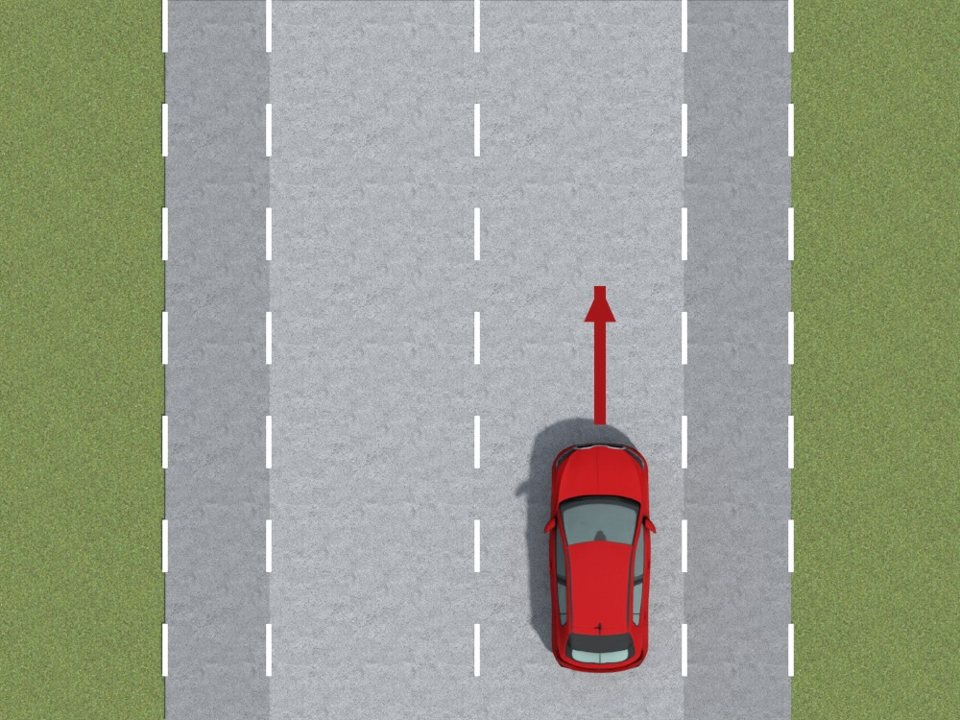
Under normal circumstances, the bright red car must keep to the right lane. Driving or remaining in the left lane without a valid reason is an offence.
§Official source · art. 9.3.1 · last amended 2004-04-30
Elke bestuurder die de rijbaan volgt moet zo dicht mogelijk bij de rechterrand van die rijbaan blijven, behalve op pleinen of om de aanwijzingen van de verkeersborden F 13 en F 15 op te volgen.
Open the full article on JustelSpeed on lanes
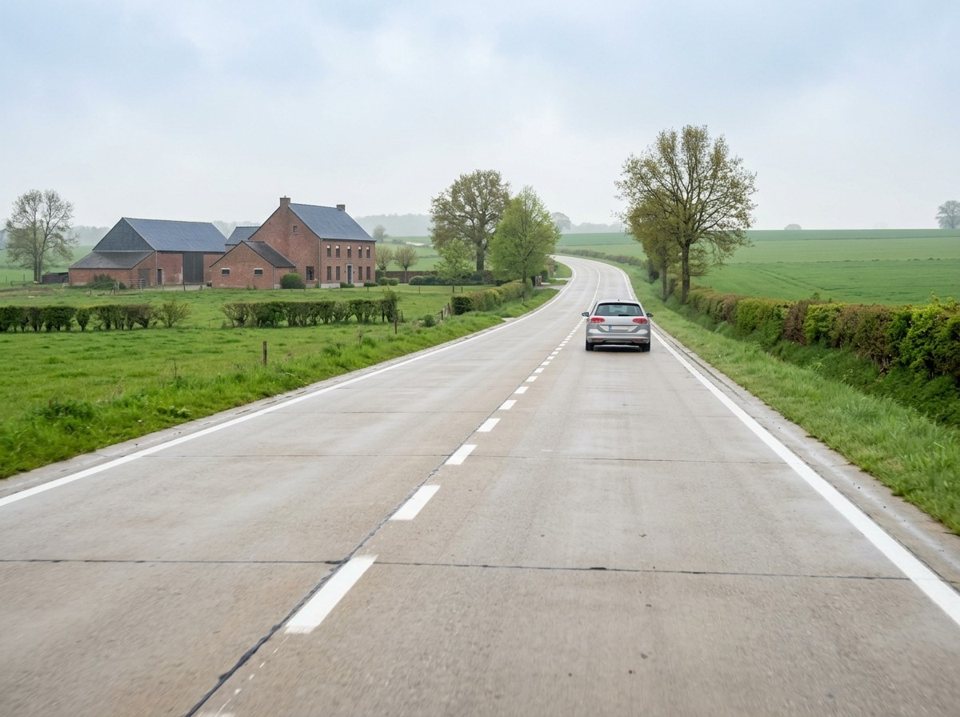
On a road divided into lanes outside built-up areas without specific speed signs, the standard speed limit is 70 km/h in Flanders and Brussels, and 90 km/h in Wallonia.
§Official source · art. 11.2 · last amended 2018-04-01
Buiten de bebouwde kommen is de snelheid beperkt :
Open the full article on JustelOvertaking over a broken line
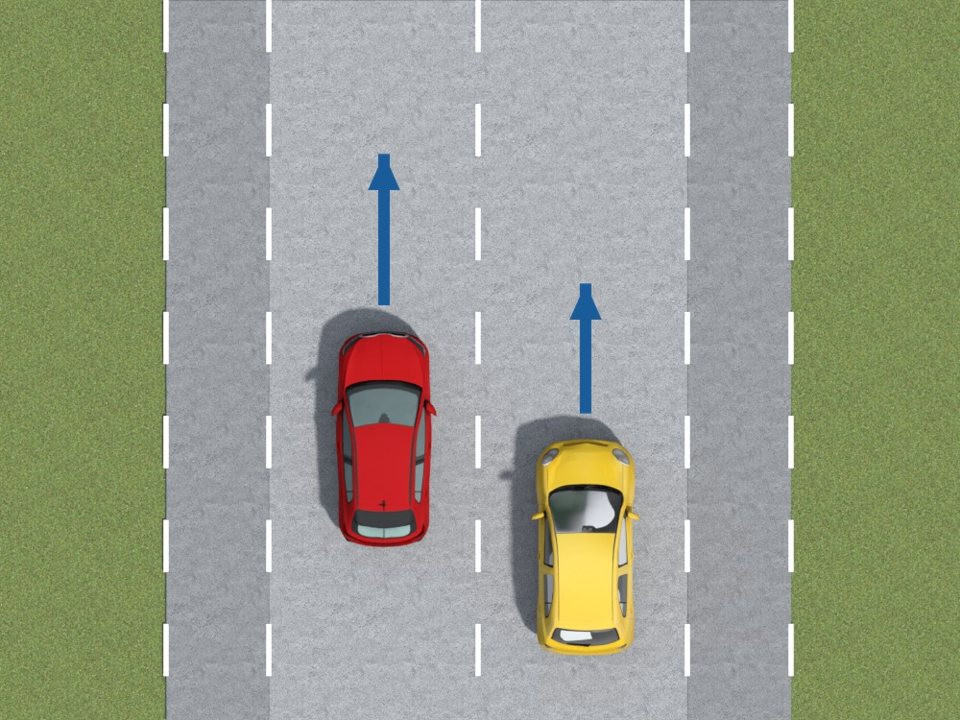
Overtaking on the left
§Official source · art. 72.3 · last amended 2023-04-01
Een onderbroken streep betekent dat het iedere bestuurder verboden is deze te overschrijden, behalve om in te halen, om links af te slaan, om te keren of om van rijstrook te veranderen.
Open the full article on JustelSolid line
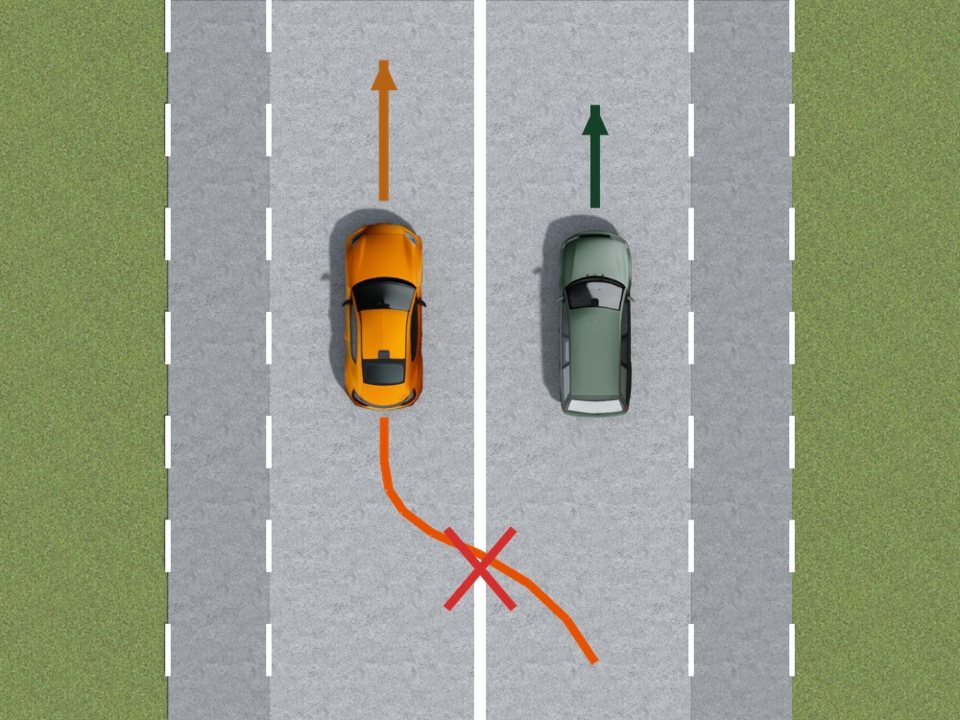
A solid white line
§Official source · art. 72.2 · last amended 2023-04-01
Een doorlopende streep betekent dat het iedere bestuurder verboden is deze te overschrijden.
Open the full article on JustelSolid line next to a broken line
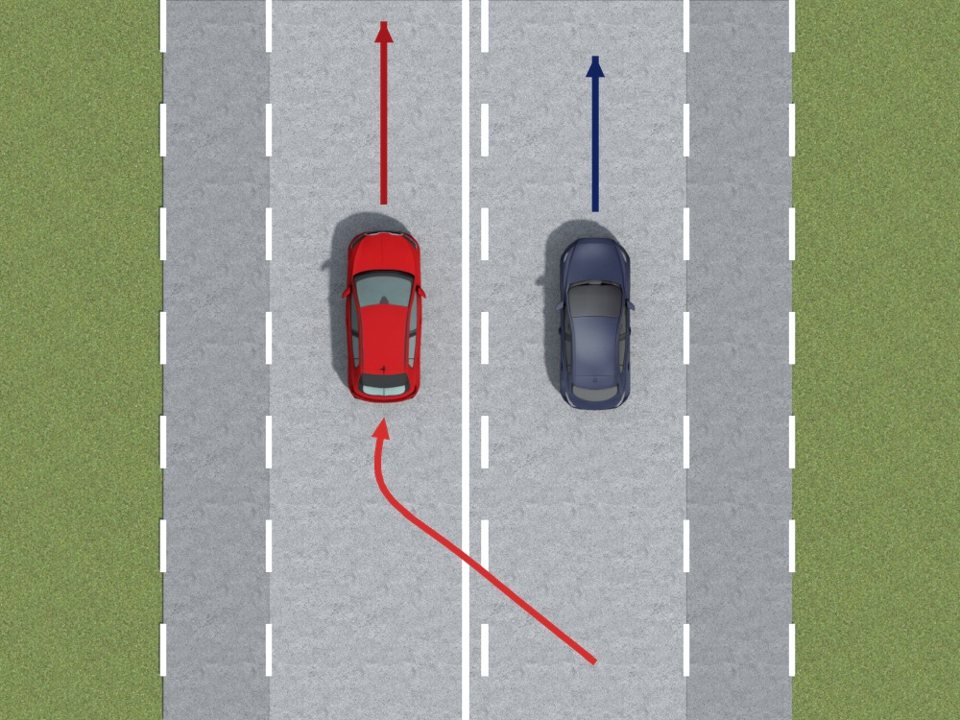
The dark blue car has the broken line on its side and may cross it to overtake. Once it has overtaken, the bright red car is allowed to cross the continuous white line to return to the right lane.
§Official source · art. 72.4 · last amended 2023-04-01
Wanneer een doorlopende en een onderbroken streep naast elkaar getrokken zijn, moet de bestuurder alleen rekening houden met de streep die zich aan zijn kant bevindt.
Open the full article on JustelLane reduction signs
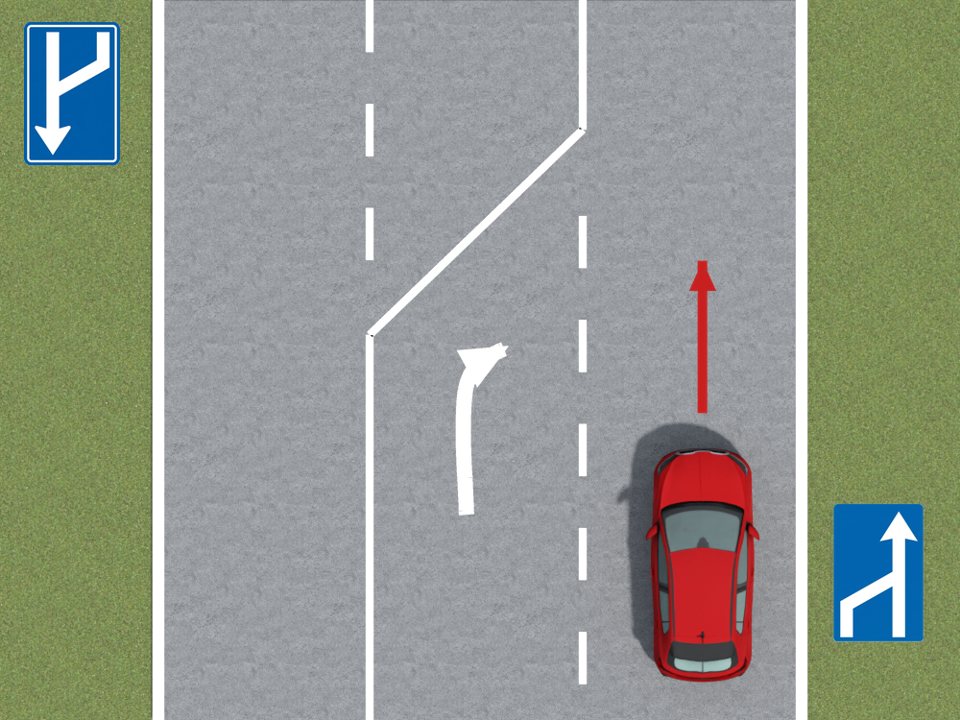
The blue sign on the right indicates a lane reduction on the left. The road markings show this reduction as the bright red car drives in the right lane.
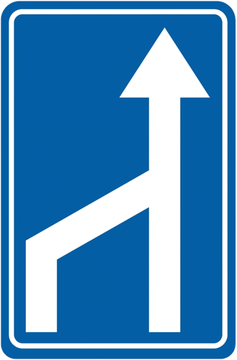 Lane reduction to the left.
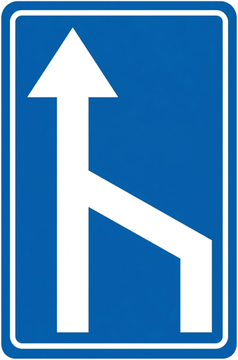 Lane reduction to the right.
§Official source · art. 71.2 · last amended 2022-10-01
71.2. De voornaamste aanwijzingsborden worden hierna afgebeeld.
Open the full article on JustelZip merge
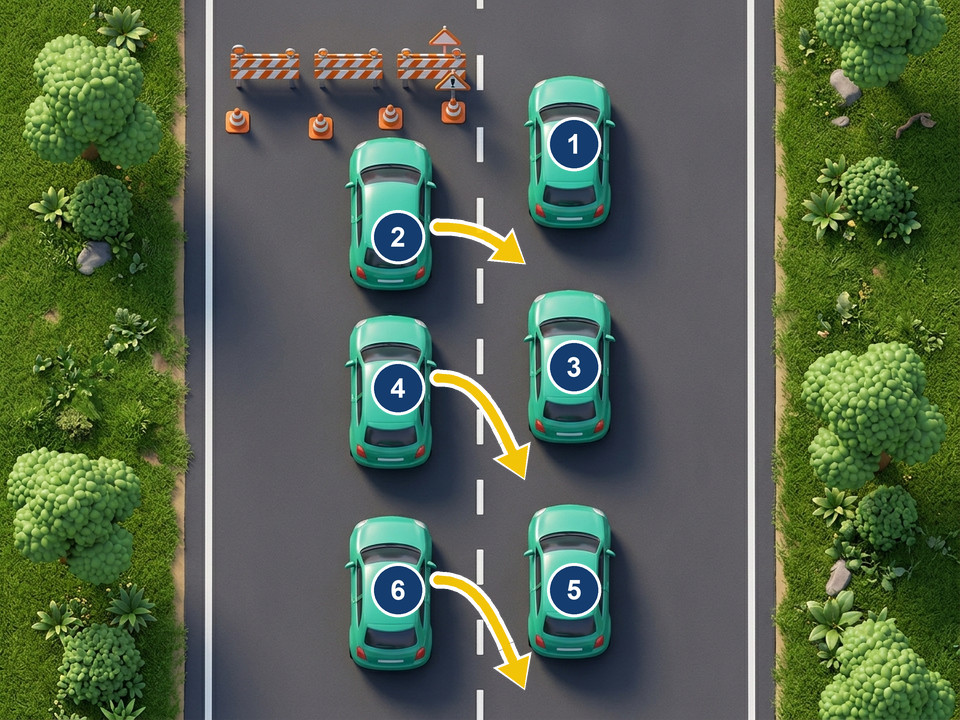
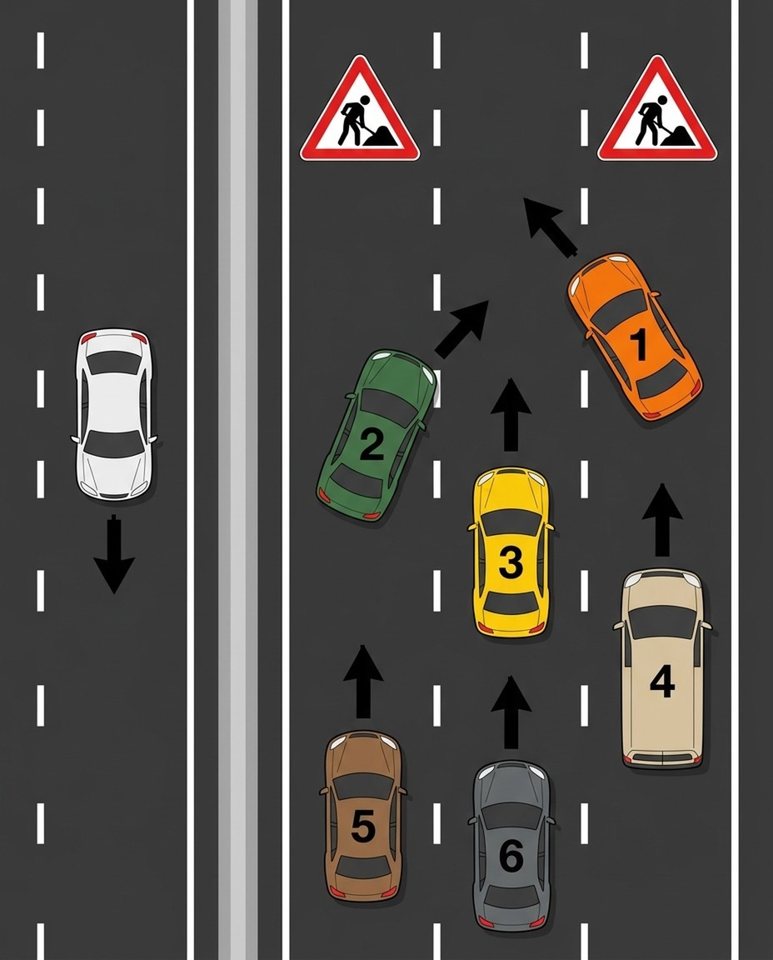
When a lane is closed and traffic is slow, cars merge like a zip, one from each side in turn. The teal cars take turns one by one, merging in order from 1 to 6.
§Official source · art. 12bis
De bestuurders die, bij sterk vertraagd verkeer, rijden op een rijstrook die ophoudt of waarop het verder rijden wordt verhinderd, mogen slechts vlak voor de versmalling invoegen in de aangrenzende vrije rijstrook.
Open the full article on JustelWhen to zip
§Official source · art. 12bis
De bestuurders die, bij sterk vertraagd verkeer, rijden op een rijstrook die ophoudt of waarop het verder rijden wordt verhinderd, mogen slechts vlak voor de versmalling invoegen in de aangrenzende vrije rijstrook.
Open the full article on JustelZip rules
Zip merge
§Official source · art. 12bis
De bestuurders die, bij sterk vertraagd verkeer, rijden op een rijstrook die ophoudt of waarop het verder rijden wordt verhinderd, mogen slechts vlak voor de versmalling invoegen in de aangrenzende vrije rijstrook.
Open the full article on JustelBus lane
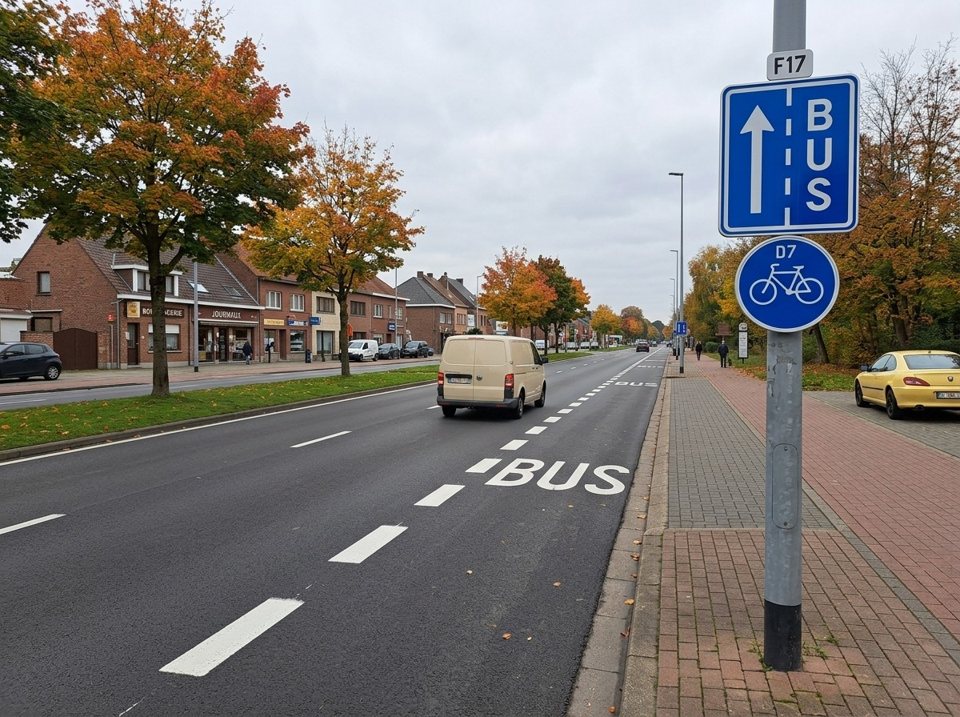
The bus lane
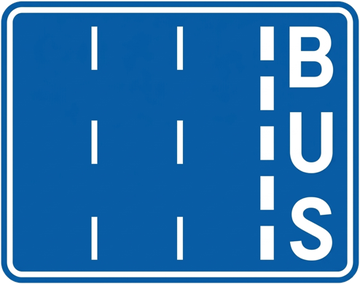 Indicates the lanes and shows which is the bus lane.
§Official source · art. 71.2 · last amended 2022-10-01
Aanduiding van de rijstroken van een rijbaan met een strook voorbehouden voor autobussen.
Open the full article on JustelExceptions for a bus lane
Who else may use a bus lane
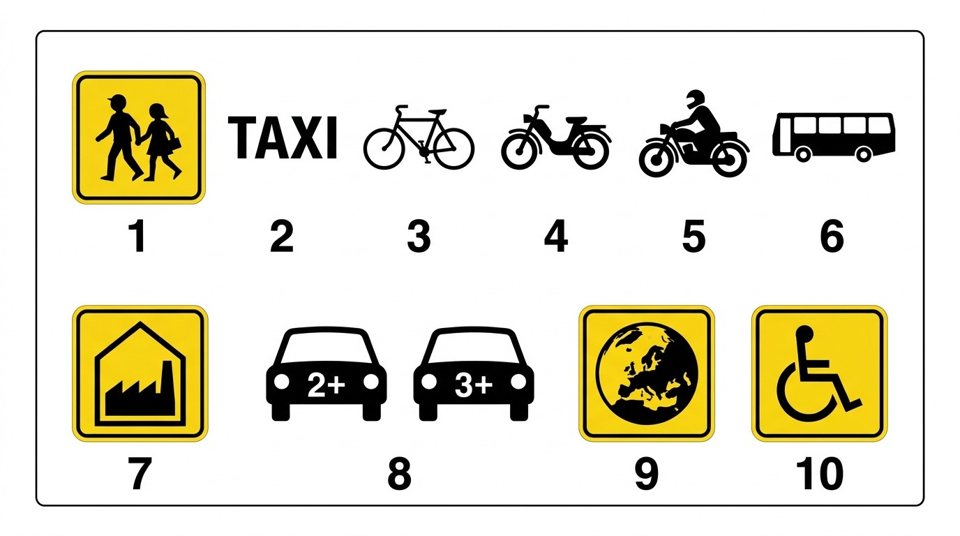
Symbols shown on an additional plate indicate who else may use a bus lane, such as taxis, bicycles, mopeds, motorcycles, or carpoolers.
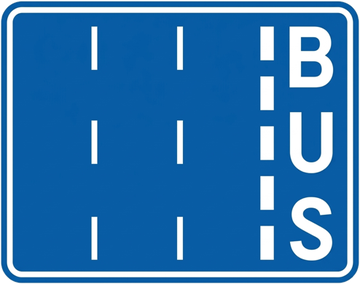 Indicates the lanes and shows which is the bus lane.
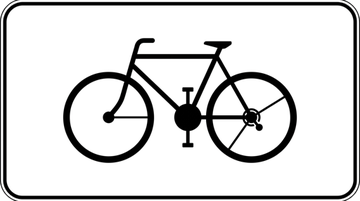 Cyclists can use this lane too.
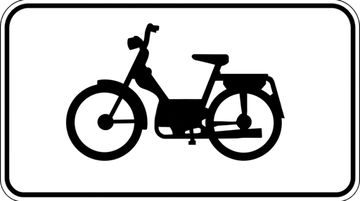 Mopeds can use this lane too.
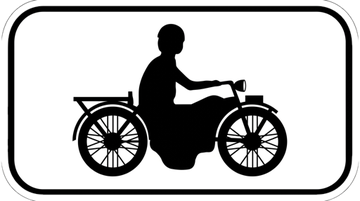 Motorcycles can use this lane too.
Two similar signs
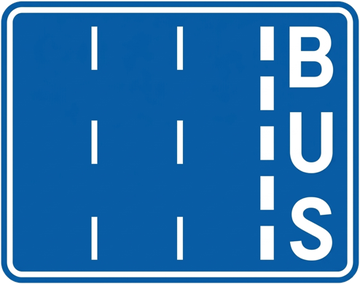 Indicates the lanes and shows which is the bus lane.
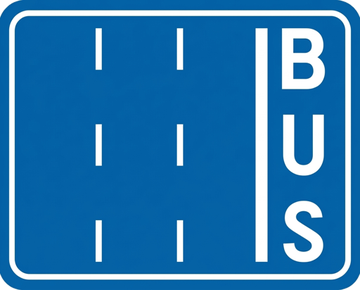 Indicates a specific lane reserved for the use of public transport vehicles.
§Official source · art. 71.2 · last amended 2022-10-01
Aanduiding van de rijstroken van een rijbaan met een strook voorbehouden voor autobussen.
Open the full article on JustelGore (traffic displacement area)
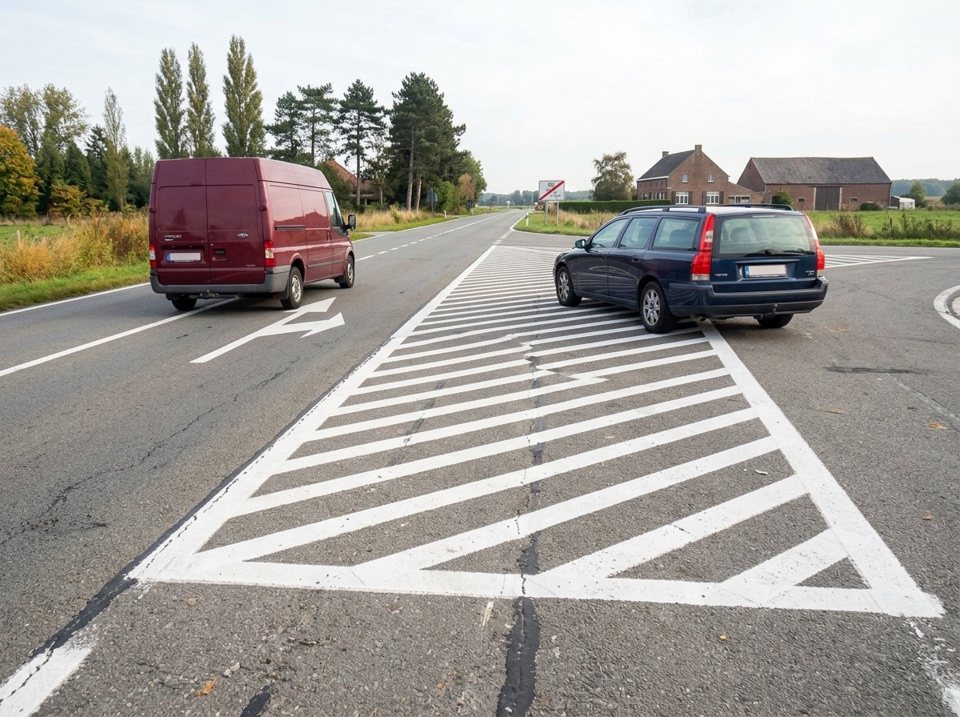
A dark blue estate car is on a traffic displacement area marked with slanted white lines. Driving, waiting, or parking on a gore is not allowed.
§Official source · art. 77.4 · last amended 1997-10-01
De bestuurders mogen niet rijden, stilstaan of parkeren op deze markeringen.
Open the full article on JustelRoad works sign
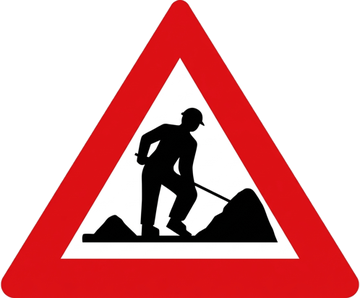 Road works.
§Official source · art. 66.4 · last amended 2022-10-01
Orange lines
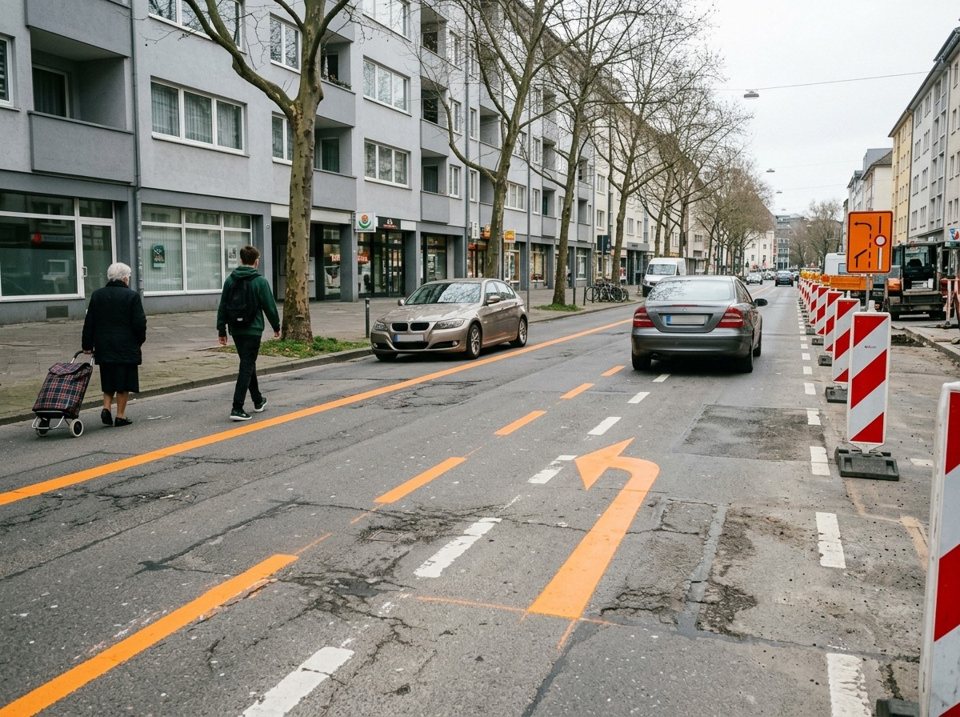
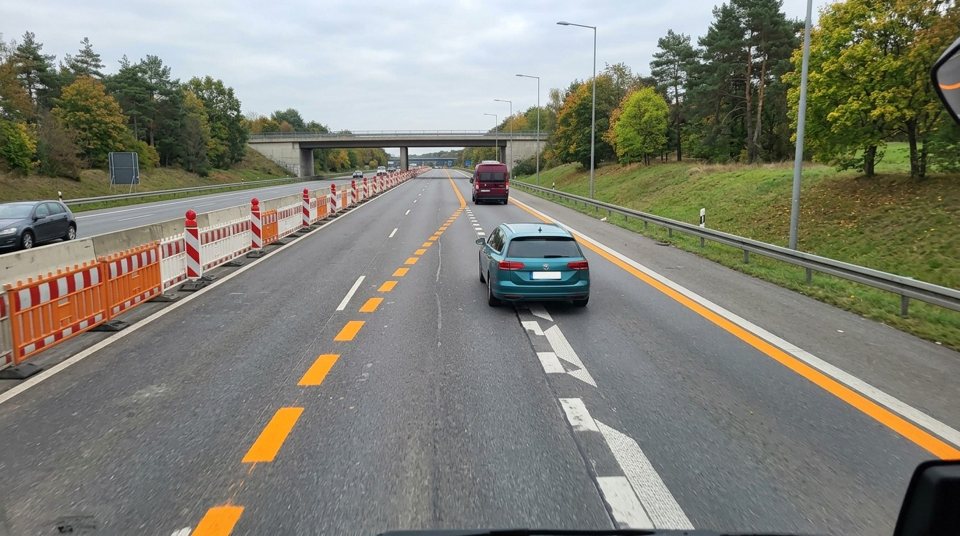
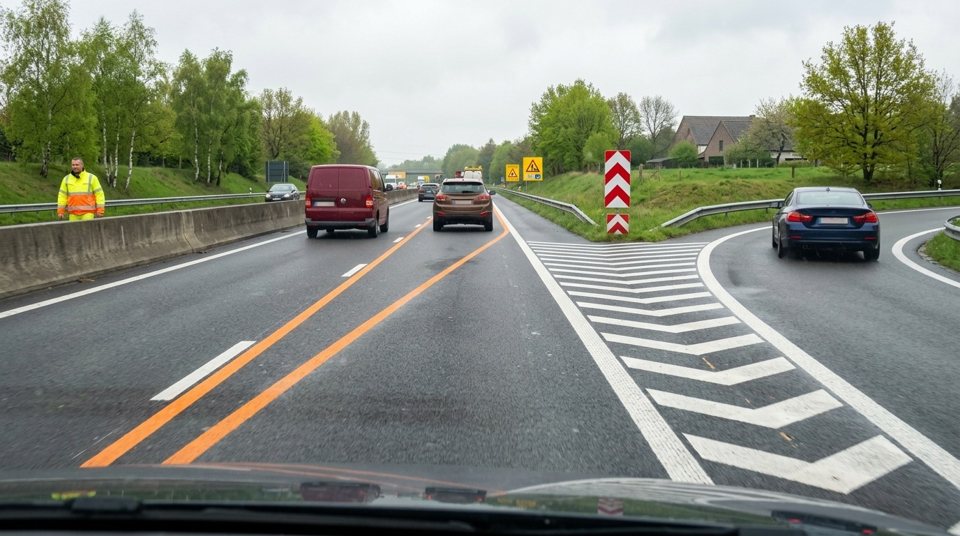
Orange lines at road works
§Official source · art. 73.4 · last amended 1997-10-01
De voorlopige markeringen maken de andere witte overlangse markeringen die op dezelfde plaats zijn aangebracht waardeloos.
Open the full article on JustelSigns in this lesson
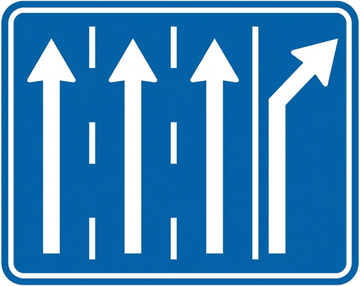 Information (or informative or indication sign)Announces arrows on the road and the lane to choose. The sign can show the different directions. The line between the lanes may be broken.
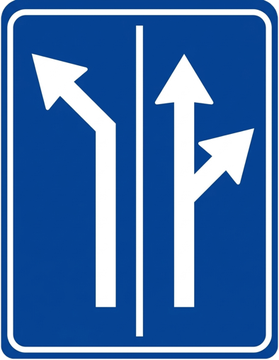 Information (or informative or indication sign)Announces arrows on the road and the lane to choose. The sign can show the different directions. The line between the lanes may be broken.
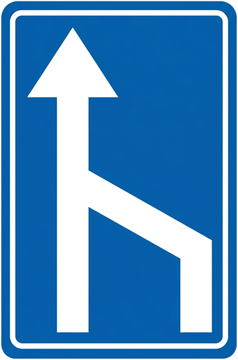 Information (or informative or indication sign)Lane reduction to the right.
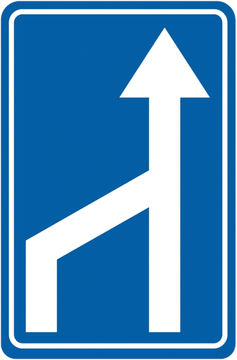 Information (or informative or indication sign)Lane reduction to the left.
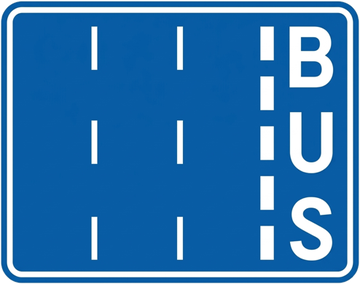 Information (or informative or indication sign)Indicates the lanes and shows which is the bus lane.
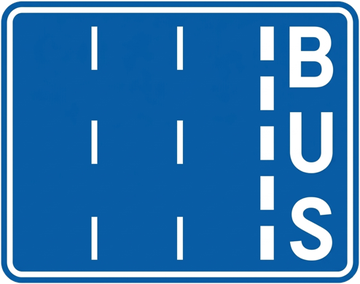 Information (or informative or indication sign)Indicates the lanes and shows which is the bus lane. Cyclists can use this lane too
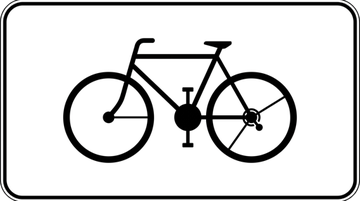 Information (or informative or indication sign)Cyclists can use this lane too.
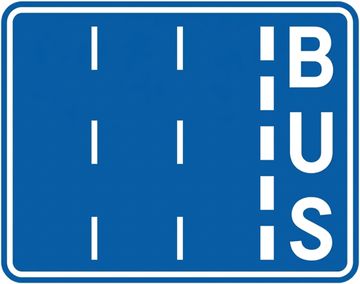 Information (or informative or indication sign)Indicates the lanes and shows which is the bus lane. Mopeds can use this lane too
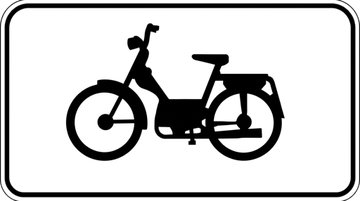 Information (or informative or indication sign)Mopeds can use this lane too.
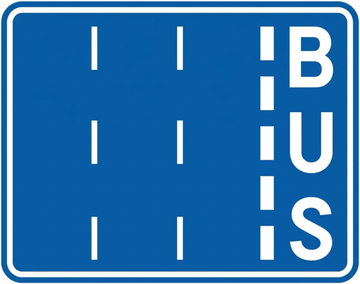 Information (or informative or indication sign)Indicates the lanes and shows which is the bus lane. Motorcycles can use this lane too
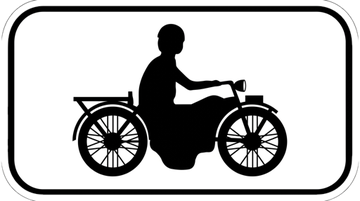 Information (or informative or indication sign)Motorcycles can use this lane too.
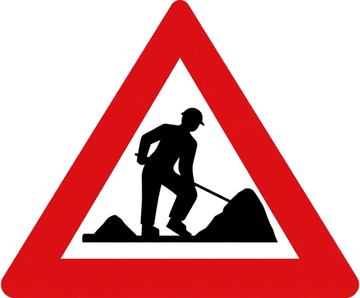 Warning sign (or danger sign)Road works.
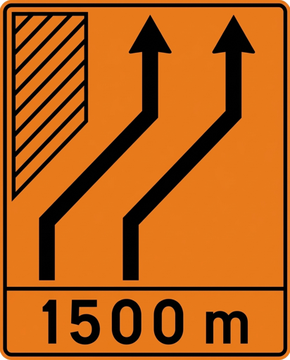 Information (or informative or indication sign)Advance road sign indicating a temporary lane diversion.
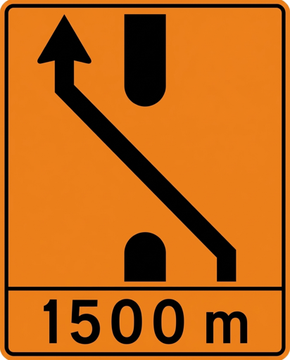 Information (or informative or indication sign)Advance road sign indicating a temporary crossover to the other carriageway.
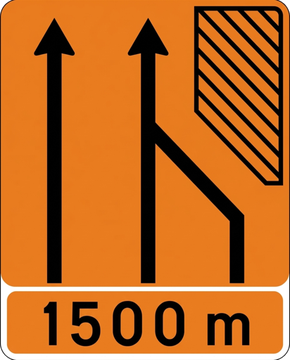 Information (or informative or indication sign)Advance road sign indicating a temporary lane closure.
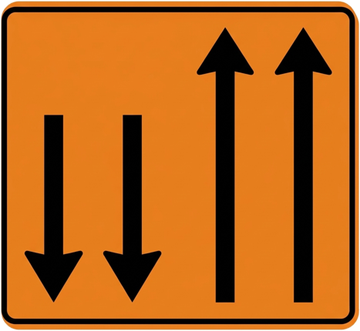 Information (or informative or indication sign)Advance road sign: two-way traffic on a carriageway that is normally one-way.
Test yourself
Pick a level. Questions you have not seen or got wrong come first.